Culture Club were one of those bands, like Duran Duran, that people always mentioned when they started waxing nostalgic about '80s music, but I never heard any of their songs until long after the '80s. I was reading an article in the '90s where the author said something like, "Well, if you've forgotten about the '80s, let me just say these words: "Do You Really Want To Hurt Me?' " And I didn't understand what the hell he was talking about. Hey, I didn't want to hurt anybody.
Funny, then, that I still knew who Boy George was, even though I couldn't have hummed you a single one of his songs, and I knew that he was some really weird-looking guy. I did know that much. I think Boy George was trying to out-do Annie Lennox in the freak show department. Whether or not he succeeded I will leave up to you.
But in my sweeping effort to re-acquaint myself with '80s New Wave, I downloaded a Culture Club greatest hits album. What struck me most about their music was that it was kind of ... wimpy. I don't need all my music to rock, but I didn't expect their sound to be so, I don't know ... gentle. It was like this strange reggae/Philly soul/Caribbean hybrid. I'm surprised it achieved the popularity it did. I like ballads as much as the next guy, but Culture Club were like a band that could only make ballads. Culture Club are like all the weird dub tracks on Sandinista!, without any songs like "The Magnificent Seven" or "Police On My Back." Even their "uptempo" songs sound like ballads.
But the weird thing is, Culture Club were not only popular - they were kind of hip. Was it because Boy George looked like Oscar Wilde on LSD? From my end, their music, although not bland, does not seem terribly ... exciting. Culture Club is not what I would have been desperately waiting to hear my whole life.
Whenever a brief Eurythmics clips would come on TV in the '80s, my father would always say, "You know, I can't figure it out, is she some kind of lesbian or something?" Imagine being seven years old and having no idea what a lesbian is. Not sure why my father felt like asking his children this question.
Now that I'm older and I know what a lesbian is, I also know that not only was Annie Lennox not a lesbian, but her band mate, Dave Stewart, had actually been her ex-boyfriend. In fact, Annie Lennox has been married twice (to men), and has even given birth to two children (with men). So, OK, she's not a lesbian. But it's safe to say that she was probably trying to look like a lesbian. Annie Lennox was like David Bowie, but from the other direction.
She also kind of sounded like a lesbian, with that deep contralto voice of hers. As Wikipedia puts it, synth pop "was often associated with all male groups and somewhat clinical, emotionless music. Eurythmics (particularly with Lennox's vocal stylings) brought a soul music twist to the electronic sound, which proved popular with broader audiences." Oh, those broader audiences!
But they weren't terribly popular at first. "Love Is A Stranger" was a flop on initial release, only to become a hit in the wake of "Sweet Dreams"s success. I'd never heard the song until recently, but I enjoy it as much as their two big radio staples. I like how Lennox deftly weaves two completely different vocal parts against each other. I also like Dave Stewart's little grunts and groans in the background:
It's savage and it's cruel
And it shines like destruction
Comes in like a flood
And it seems like religion
It's noble and it's brutal
It distorts and deranges
And it drenches you up
And you're left like a zombie
I love her pronunciation of "brutal," as if she's taking elocution lessons from Henry Higgins, and then she says to hell with elocution and drops a big "zombaaaaaaaaayy" on us.
AMG's Stewart Mason writes that the song "sounds like a sop to the charts, a way to soften up radio for the more extreme 'Sweet Dreams (Are Made of This)' " before adding that, "Ironically, in the US, the latter song was a hit first."
It's funny to think of "Sweet Dreams," which Mason describes as "decidedly minimalist, downright skeletal" as something "extreme" that needed to be "softened up," because I've always lived in a world where it was a massive, seemingly inevitable hit. The lyrics are evocative without seeming either too specific or too abstract. Wait, who wants to use who again? Who cares? And notice, once more, what an excellent a job Lennox does of singing with herself.
The video probably didn't hurt its sales. I'd seen bits of it here and there, but a couple of years ago I finally watched the complete clip on YouTube. This is one of those '80s music videos where the sharpness of the images and the rhythm of the editing really do justice to the recording. Lennox appears to be singing from the board room of a Bond villain's corporate hideout. Hopefully there was a fire extinguisher around, in case somebody needed to put out her hair.
I've always thought of "Here Comes The Rain Again" as "Sweet Dreams Part II." It has the same sort of beat and a similar melody. Sometimes I would even hear it on the radio and think, "Hey, it's 'Sweet Dreams!' Oh wait, it's that other song." But there is one key musical difference: the addition of swirling strings. According to Wikipedia:
"Dave Stewart revealed that the lyrics to the song came into being after an argument between himself and Lennox while they were doing some songwriting in New York City's Columbus Hotel. The basic melody had already been written and Lennox looked out the window after their fight and noticed it was starting to rain. She announced, "Here comes the rain again."
Hey, just the thing to cheer them up - the composition of a smash single! Stewart elaborates:
" 'Here Comes The Rain Again' is kind of a perfect one where it has a mixture of things, because I'm playing a b-minor, but then I change it to put a b-natural in, and so it kind of feels like that minor is suspended, or major. So it's kind of a weird course. And of course that starts the whole song, and the whole song was about that undecided thing, like here comes depression, or here comes that downward spiral. But then it goes, 'so talk to me like lovers do.' It's the wandering in and out of melancholy, a dark beauty that sort of is like the rose that's when it's darkest unfolding and blood red just before the garden, dies. And capturing that in kind of oblique statements and sentiments."
OK, fine, Lips Unsealed is probably not the greatest book ever written. However, it is The Greatest Book Ever Written.
If I had to come up with a subtitle for Lips Unsealed, it would be something like this: "How I did coke for thirty years (all the while somehow managing to look fabulous the whole time), practiced witchcraft, morphed from a hardcore punk rocker into a power ballad superstar, became washed up in America but some sort of Europop dance diva in England, went on a trip to Thailand where I shoved opium up my ass, finally got sober for good, had my son come out of the closet, recorded an album of songs entirely in French with Brian Eno, and lived to tell about it."
Lips Unsealed is like if the Pyramids could talk. Lips Unsealed is like if Abraham Lincoln came back from the dead and wrote a book about what he was thinking during the Civil War. You're sitting there wondering, "God, what was going on in Belinda Carlisle's head?," and suddenly, there she is, telling you.
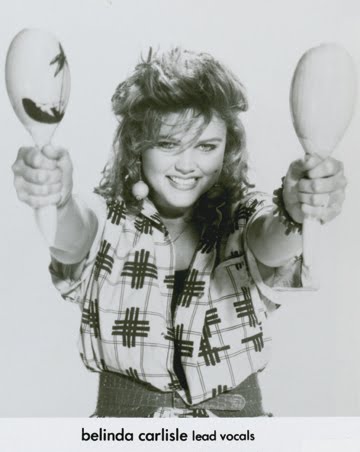
Look at her, on the cover, with that sweet, smiling face. Seems like your typical suburban mom. And I suppose she is, in a way. But don't be fooled.
I had some pretty high expectations for Lips Unsealed. The book surpassed them. Sure, you're thinking, another rich drug addict rock star tell-all memoir. Come on, these things are a dime a dozen. Yeah, but ... it's Belinda Carlisle. Her career was absurd. It's like if the cigarette-smoking goth chick suddenly became the head cheerleader. It would be ridiculous. It's like if you or I became some sort of MTV superbabe. It never happens. Except, this one time, it totally did.
Although during my early research I became convinced that Belinda Carlisle was my '80s Dream Woman, I still had some nagging fears. What if Carlisle didn't really "get" her career? What if she didn't really understand the absurdity? Upon reading Lips Unsealed, I promptly put those fears to rest. The author of this book is a riot. She is sharp as a tack. After all her personal highs and lows, you couldn't put much past her.
Here's a segment from the book's introduction - the very first page:
I came home one day from a friend's house holding a book that seemed like it might help me change my life. I hid it under my sweatshirt and went straight to my bedroom. I felt a tingle of excitement as I slipped it out and looked at the cover: The Satanic Bible by Anton LaVey. I read bits and pieces, and although I understood very little of the author's rant against Christianity, I focused on terms like "exorcism," "evil," and "black magic," thinking I could find out how to cast spells and take control of my life.
Yes, it's true, fame can be a difficult burden to - wait, what? Belinda! What the hell are you talking about?
You want your sex, your drugs, and your rock and roll (particularly the drugs)? Lips Unsealed delivers. It's one of those books where "I was on drugs the whole time, and yet somehow I remember everything" (funny thing is, I believe her). But Lips Unsealed is so much more. Go ahead and laugh. But this book is a work of stunning depth and insight.
For you see, Lips Unsealed is a tale of escape. It is about a woman who wanted to escape from her depressing, dysfunctional childhood. She did so in two ways: through music, and through drugs. One method served a greater public good; the other, not so much. She kept trying and trying to escape, until one day she realized her life was actually fine and she didn't need to escape anymore. It's just that this "one day" happened to be a day in her late 40s.
So what was it really like? You know, having the most awesome career of all time? Well, according to Belinda Carlisle, it was ... kind of shitty.
A representative section of Lips Unsealed might read something like this: "Then I went on another tour with the Go-Go's, and I thought my singing stank and I don't know why anybody even wanted to see me perform, and then I sat in my hotel room for two days and did coke, and then I did a bunch of interviews where I said I felt great but I was lying out of my ass, and then I obsessed about my weight and I thought I needed to go on a diet even though everyone said I looked great, and then I did a solo album and I liked a couple of the songs but I thought most of it was crap because I was too high and lazy to make it better, and then I lied to my husband about my coke use, and then I met the Duchess of York, which was pretty cool, and then I did some more coke and I felt like shit."
It's great!
In Belinda Carlisle, we seem to have had that very rare, special creature: the ultimate self-loathing pop star. Here was a celebrity who, despite what everyone else kept on telling her, never thought she was very attractive, very interesting, or very talented. Compare this to many of the pop divas of today, who don't seem to be able to get enough of themselves. Instead, Carlisle sounded an awful lot like ... me.
Maybe the author would take this the wrong way, but I found Lips Unsealed to be ... really encouraging. I mean, here I was, working day after day at a shitty temp job, trying to make a short film that nobody was really going to watch anyway, writing on some blog that nobody was going to read, feeling lonely and unfulfilled. And here was this woman, who seemed to have had everything: wealth, talent, beauty, you name it. At first I thought, "Man, I wish I could be like Belinda Carlisle." But after reading this book, I thought "You know what? Actually, I'll stick to being Little Earl, thank you very much." To hear this woman, who seemed to have so much going for her, talk about how she mostly felt like a pathetic loser her entire career - well, it made me feel a little better about myself. The grass is always greener, as they say.
It was also refreshing to hear about the rock star experience from a female perspective, particularly since I don't actually know anything about females. In fact, I discovered that Belinda Carlisle and I have almost the exact same taste in music. Here is a woman who is equally fond of Iggy & The Stooges and the Bee Gees. But if you're wondering whether Carlisle is fully aware of how schizophrenic her musical output has been, well ... so am I. She sounds equally fond of her punk years and her adult contemporary cheese. But you know, why shouldn't she be?
This book also contains the best description of the L.A. punk scene I have ever read. Granted, it's the only description of the L.A. punk scene I've ever read, but that's beside the point. Seriously though, who even thought that a vivid portrait of such a grungy musical moment would have come from Belinda Carlisle? It's like if Neil Diamond wrote a book about what it was like hanging out in Haight-Ashbury in 1967. I remember reading an interview with Hollywood director Billy Wilder (Double Indemnity, Some Like It Hot, etc.) conducted in the '90s, and he started talking about his youth in Austria, and he mentioned that as a young newspaper reporter he briefly met Sigmund Freud. I thought, wow, what was he even doing there? Some people manage to straddle different worlds.
So there you have it. No work so perfectly captures the wild ride that was '80s mainstream pop: how energetic New Wave lost its energy in a cockfight and bargained with the Tijuana police for the right to continue on as Yuppie Rock. I can think of no more suitable tour guide through the wreckage than this slightly jaded, slightly amused, but mostly relieved survivor. We all know about the Madonnas, the Michael Jacksons, the pop superstars of the era. It's time we take a look at the less heralded careers, the frontage roads of the '80s pop highway. Through the magic of YouTube, this epic life has been captured in magnificent detail. Also, I am desperately in love with her and cannot stop obsessing over her hot, hot body.
Join me, if you will, on a journey like no other. It shall be another series in my ongoing parade of '80s pop music series. I shall sprinkle it in between Cosby Rock, Fun New Wave Surprises, the soon to be initiated Country Goes '80s, and any other series I damn well choose to initiate. Join me, now, on a journey that shall be known as "Adventures With Belinda Carlisle."
If someone asked me to come up with the most absurdly awesome pop singer career I could think of, designed to appeal specifically to me, Little Earl, I think this is what I would have come up with. No, scratch that; what I would have come up with wouldn't have been as good.
Upon closer inspection, I came to realize that Belinda Carlisle appears to have collaborated with, performed on the same bill as, or at the very least met, members of every single one of my favorite bands. The Beatles? Check. The Beach Boys? Check. The Rolling Stones? Check. Fleetwood Mac? Check? The Bee Gees? Check. Roxy Music? David Bowie? Queen? Elton John? Check check check check.
Elvis? No, but she claims he is her favorite singer and she wears white underwear in his honor (Elvis apparently liked white underwear). Frank Sinatra? No, but she once had an amusing encounter with Sammy Davis, Jr. in a Hollywood restaurant. Michael Jackson? No, but she claims he once called her hairdresser to ask if she wore a wig (she didn't). Nirvana? No, but her former Germs band mate Pat Smear went on to become essentially the fourth member of Nirvana during their last year or so of existence.
You name it, she's done it. Number One album, and single? Yep. Selling out Wembley Stadium? Yep. Marrying the son of a movie star? Yep. I was even surprised to discover that, although her solo career essentially dried up in the US around 1990, she remained extremely popular in the UK throughout the early '90s, even scoring Top Ten hits as late as 1996.
1996! I mean, this was when the UK music scene was really happening with, you know, real artists. And people were still listening to Belinda Carlisle? Christ on a cracker.
What had begun as a vague, casual interest had now slid into a sick, twisted obsession. I rapidly consumed every Belinda Carlisle YouTube clip I could get my hands on. I did Belinda Carlisle YouTube clips the way Belinda Carlisle did coke. Did you know that there are whole secret YouTube caverns and crevices dedicated solely to Go-Go's and Belinda Carlisle clips? I have been there. I have been to the mountaintop.
So, to summarize: Girl goes from being in arguably the first L.A. punk band ever, to being the lead singer of one of the greatest New Wave bands ever, to becoming a late '80s Top 40 cheesemeister, to becoming a European chart fixture at the height of Britpop ... I mean, here is a woman who managed to consume every chemical known to man, send pictures of her vagina to men's hotel rooms, pose for Playboy, and still came off classier than Madonna ... why, this has to be the greatest, zaniest career of all time. A career so zany, you couldn't make it up if you tried. A career so zany, someone needed write a book about it. Just to put it all in perspective, to try to make some sense of the whole shebang. Hell, I would do it myself - that is, if it hadn't been done already.
Ah. For you see, during my research, I quickly discovered that someone had recently (June 2010) beaten me to the very punch. Imagine my surprise when I learned the author's name:
Come on, stop joking around, show me a picture of Belinda Carlisle.
Really?
No, not Miss America 1986, I said a picture of Belinda Carlisle. You know, former Germs member Belinda Carlisle?
Holy Moley.
I'd heard things here and there. I remember when my brother went to a Go-Go's reunion show in Golden Gate Park about ten years ago, and I asked him over the phone how it was. The first thing he said was, "You know, Belinda Carlisle, I have to say, she's still looking pretty good." But my brother tended to be rather horny in those days and he was attracted to just about anything that moved.
I also remember when Carlisle posed for Playboy right around the same time. But men who grew up in the '80s, I felt, seemed to retain a fondness for girls of their pop culture youth whether they were all that attractive or not. I dismissed their enthusiasm for nude Belinda Carlisle photos as simply misplaced nostalgia.
But now, after having seriously listened to the Go-Go's and Carlisle's solo material, and having been amused by her secret punk rock history, I started taking a good look at her music videos on YouTube. And another good look. And another.
Oh. My. God.
Ladies and gentlemen, I had finally found her:
My '80s Dream Woman.
Let's face it. Most girls who were considered "hot" in the '80s, when you actually look at them now, look kind of ridiculous and, frankly, not all that hot. But Belinda Carlisle in the '80s still looks pretty good. Like, in 2012.
I mean, when people talk about a hot female singer from the '80s they probably think of Madonna. Here's Madonna, circa 1986, in the "Papa Don't Preach" video:
Now, here's Belinda Carlisle, circa 1986, in the infamous "Mad About You" video:
Yeah. Oh yeah.
I mean sure, Madonna had a certain sex appeal and great fashion sense. But Belinda Carlisle was ... pretty. You might want to have sex with Madonna, but you would have a crush on Belinda Carlisle.
Oh, and did I mention the former depraved punk rocker thing? You see, most female singers who are attractive are also rather boring and shallow. Imagine if one of these singers also happened to be intelligent, complex, zany, and knowledgeable about the musical culture around her?
Guys, I think I'd hit the jackpot.
And you'd think all the drugs she ingested would have shown up at some point and made her look shittier, but it seems like it was the other way around. She must have struck some sort of weird Faustian bargain: the more drugs she took, the better looking she got.
So add it all together: the former punk career, the surprising fondness for coke, the looks of a homecoming queen - I was left to draw only one final conclusion ...
So, as I perused Go-Go's and Belinda Carlisle videos on YouTube, in search of the answers to so many questions, I kept reading oblique references to "drug use." Just what kind of "drug use" were we talking about here? As far as I could tell, Carlisle was so clean-cut she made Barbra Streisand look like Janis Joplin. She seemed like the kind of girl who would scream if she broke a nail. Apparently those D.A.R.E. ads didn't work for her.
Turns out Belinda Carlisle did coke. Lots of coke. Mountains of coke. Enough coke for a small Eastern European country. More coke than Stevie Nicks, Marvin Gaye, and Richard Dreyfuss combined. Take the hypothetical amount of coke that Led Zeppelin, Van Halen, the Eagles, and Oasis may have consumed over the course of their entire careers, multiply that by five, and you might - might - be somewhere near the amount of coke that has been snorted by Belinda Carlisle.
Folks, this might explain everything. This might explain how, in just a few short years, she went from being a contemporary of X to a contemporary of Tiffany. Apparently she was on coke for years and years. It's quite possible that she may have had no idea what was going on the whole time.
The plot only thickened after I found an interview Carlisle did with Jenny Stewart of PlanetOut.com in 2009. Some excerpts:
If you had a five-hour window, where you could do any drug in the world with the assurance that nothing bad would happen and you'd be safe ... what drug would you do, and under what circumstances --
[Excited]. I can tell you exactly what it would be. I don't need to think about it! OK, it would be mushrooms, and it would be in the countryside in Ireland, which was one of the best days of my whole life when I did that! I went on a complete mushroom trip for an entire day, with a backpack filled with fruit, and it was so much fun.
Were you with anybody?
Oh, yeah! I was with an actual mushroom priest, and had a complete ceremony, and the whole thing -- and it was completely sacred, and it was AMAZING! I never would have guessed mushrooms. Yeah, definitely mushrooms. You probably would have guessed cocaine, but no -- no coke or anything speedy. Mushrooms, for sure. Totally.
You referred to what was maybe a bad party once as a result of "too much cocaine, Quaaludes and boredom." Totally random -- do you remember the number that was on a Qaaulude pill?
Yup -- seven-fourteen. Yes! [Laughs] That's scary, huh? But I used to love them.
What happened to them? Why did they stop making Quaaludes?
Well, because they were too good, that's why. [Laughs] They were just too good. I mean, I used to love the whole sort thing where you know, you'd get them, and then you'd take one. And then you'd just sort of wait for your fingers to get numb, and then your mouth would go numb, and then everything would just sort of get all . . . pear-shaped, basically.
Was there ever a super gorgeous lesbian groupie or even just a fan that made you think, "Wow!"
Oh, well, yeah -- that's happened quite a few times through the years. And not just to me, but to all the girls in the Go-Gos. And come on, it's always flattering, I mean, I'd rather have it from someone attractive than from someone ugly.
Damn. Belinda Carlisle was no delicate flower. This woman had been around.
Then Stewart proceeded to play a rather naughty game with Carlisle:
Would you be willing to play "Who would you rather sleep with?" I chose some female rock stars from the '80s, and you tell me which one you'd rather sleep with -- and why.
I'll play; it sounds funny.
OK -- Debbie Harry or Pat Benatar?
Debbie Harry. I mean, from what I said before and also because I wanted to be Debbie Harry when I was 17.
[Laughs hard] Janis IAN? Oh, my God, that's so scary! I'd say Joan Baez. [Laughing]
But why?
Well 'cuz she's more attractive! [Still laughing].
Exene (from the punk band X) or Phranc the lesbian folk singer?
[Laughing] Oh, my God, that's slim pickin's right there! Hmmm. Well, I think I'd have to go with Phranc the lesbian folk singer.
Corey Haim or Corey Feldman?
Ewwww!!! Oh, God! [Laughs hard, then silence.] Hmmm. [Laughs harder.] Oh, God. OK, probably Corey Haim. [Laughing.]
But why Haim? You have to give a reason.
I don't know! I have no idea! [Laughing.] Well, because ... isn't Corey Feldman the one who moondanced? He was the one Corey that did the moonwalk, right? Anyone who does that? I mean, come on. No way.
OK, last one. Madonna or Cyndi Lauper?
Oh, I'd definitely go with Madonna. Just so I could say "I've been with Madonna."
For somebody with such a tame solo career, Carlisle sounded pretty ... zany. I was digging her style. Instead of finding answers, I felt as though the mystery was only deepening. I became even more intrigued when I discovered another surprising facet of this woman's career.
So here is how much, until I started learning about the Go-Go's, I knew about the Germs.
The Germs were arguably the first L.A. punk band. Now, there were three major punk scenes in the late '70s: New York punk, British punk, and L.A. punk. I prefer British punk the most, and also have quite a fondness for New York punk, but L.A. punk is probably my least favorite of the three. As Stephen Thomas Erlewine writes in his review of the Rhino compilation We're Desperate: The L.A. Scene (1976-1979), "the Los Angeles scene wasn't nearly as rich and diverse as those in New York and London. New wave pop didn't have a stronghold in the L.A. punk community, which tended to favor raw, hard, amateurish punk." In other words, L.A. punk kind of stank like a smelly sock.
The best part about the Germs was probably the band members' stage names: Darby Crash, Pat Smear, Lorna Doom, and, briefly, a young woman going by the name of Dottie Danger (who unlike her band mates, would eventually become known to the world under a different moniker).
Darby Crash was their Johnny Rotten and Sid Vicious all in one, antagonizing the audience with his lead singing a la Rotten, and becoming a raging junkie a la Vicious. During concerts he would smear himself with peanut butter and salad dressing. He also had a hard time singing into the microphone.
The Germs recorded one album (produced by Joan Jett!) before Crash came back from a trip to England proclaiming that his new musical hero was Adam Ant. Not long afterward, he intentionally overdosed on heroin, the day before John Lennon was assassinated. Nice timing.
In the end, I might like the Germs' story more than their actual music. But what I think of them is really not important here. What you need to know is this: the Germs were about as gritty, raw, credible, and influential as L.A. punk got. In other words, later (and better) bands started out wanting to be the Germs.
So, I'm reading the Wikipedia entry on the Go-Go's and I come across this: "They were formed as a punk band and had roots in the L.A. punk community; they shared a rehearsal space with X, and Carlisle (under the name 'Dottie Danger') had briefly been a member of punk-rock band The Germs."
Cue the sound of a needle being ripped from a spinning record. Did I just read that Belinda Carlisle had been in the Germs? Not "the" Germs? Perhaps they meant a different Germs? Perhaps they meant a different Belinda Carlisle? Maybe someone was pulling a Wikipedia prank? Surely this couldn't have been true, under any circumstances. I checked the Germs' Wikipedia article:
In April 1977 the band added Lorna Doom (Teresa Ryan) on bass, with transitional member "Dottie Danger", later famous as Belinda Carlisle of The Go-Go's, on drums. Carlisle never actually played with the band, owing to her being sidelined by a bout of mononucleosis for an extended period, and she was replaced by her friend Donna Rhia, real name: Becky Barton, who played three gigs and recorded their first single. Carlisle remained a friend and helper of the band throughout (she can be heard introducing the band on the Germicide: Live At The Whiskey recording, as produced by Kim Fowley), only leaving because her new band, the Go-Go's was becoming popular and, as she put it, "I was really disturbed by the heroin that was going on."[4]
Umm ... hold on a minute here. Did Wikipedia mean to tell me that the sweet pop princess responsible for "Heaven Is A Place On Earth" used to hang out with ... Darby Crash? Meaning, if you went up to Belinda Carlisle and asked her, "So what do you think about Darby Crash," instead of saying, "Who the hell is that?" like any reasonable person would expect her to say, she would say, "Oh yeah, we were friends back in the late '70s."
No. Way.
"Dottie Danger"?
This was good. This was really too good.
OK, you're saying, big deal. So the lead singer of the Go-Go's used to be in some punk rock band. But you don't understand. You don't know what this means.
For starters, it means that not only had Belinda Carlisle been a genuine punk rocker; she had been in one of the most "punk" punk bands in all of Los Angeles! At one point, she had been more "punk" than people who actually cared about being considered "punk"!
This instantly became my favorite piece of celebrity trivia of all time, trumping other former champions such as:
* Waylon Jennings played with Buddy Holly, and almost ended up on the plane that crashed with Holly, Richie Valens and the Big Bopper on it!
* Shirley MacLaine and Warren Beatty are actually brother and sister!
* Neil Young and Rick James were once in the same band together, before either had become famous!
* Al Gore and Tommy Lee Jones were college roommates!
Now, those are all amazing and weird, but ... Belinda Carlisle in the Germs! This was more than just a mere piece of "trivia." I was not content to simply let this go. No, readers, I smelled blood. I needed answers. How does someone go from being in the Germs to being ... Gloria Estefan? Listening to her solo career, you'd think she'd never even touched a germ in her life. It would be like someone coming up to me and telling me, "Hey, did you know that Debbie Gibson used to be in the Circle Jerks?" Why no. No I did not.
In other words, you don't simply end up in the Germs by accident. My God, this changed everything. My assumptions about Belinda Carlisle's personality needed to be vastly reassessed. Why, anyone who could be in the Germs must also possess some awareness of the darker, edgier side of life. This was not apparent in Carlisle's solo career. At all. In any way. She wasn't some "mainstream rocker"; she was Whitney Houston - without the grit. It's like sitting next to the boring preppie girl in English class who has a boring preppie boyfriend, and then one day you peak into her backpack and you see DVDs of Taxi Driver and A Clockwork Orange in there. Wait a minute, she's not supposed to know about those kinds of movies.
Why, if I lived in a world where Belinda Carlisle could have been in the Germs, then ... maybe I wasn't quite so alone after all.
Thus began the Great Belinda Carlisle Mystery of 2011.
Most punk musicians were actively against mainstream pop. To them, punk wasn't just a musical style; it was also a political point of view. Most punk rockers thought long and hard about the direction of their careers - whether what they were doing was ethical, whether it was culturally challenging, etc. etc.
Most, not all.
And yes, many artists who started out in the punk world eventually crossed over into the Top 40. But not, as far as I know, quite so thoroughly. Indeed, the Go-Go's are one of three artists to appear on both the Pitchfork 500 and my '80s Tape (the other two are David Bowie and Hall & Oates). Also, not too many artists from the L.A. punk scene eventually graced mainstream radio. With New York and London punk it was much more common: Blondie, Talking Heads, The Clash, Billy Idol - hell, even Patti Smith had a Top 40 hit! But L.A. punk was hardcore. I'm amazed anyone from that scene actually wanted to go pop. And Belinda Carlisle didn't just go "pop." That's like saying Tarantino movies are "violent."
I suppose if I knew Belinda Carlisle back in her punk days and watched her dive headfirst into the cheese, I might have called her some sort of sell out. Instead, because I originally thought of her as a tame pop singer and then discovered that she used to be a wild punk rocker, I suddenly thought she was awesome, and getting even more awesome by the minute. Besides, one of the most annoying aspects of punk culture is its obsession with "purity" and "authenticity."
Still, I wanted to know: why? Why would a singer so committed to punk rock go so thoroughly ... yuppie? After further research, I came across my potential answer.
So here is how much, until approximately a year ago, I knew about the Go-Go's.
The Go-Go's were the first all-female rock band. Not really, but they were the first all-female rock band that anybody gave a shit about, ie. to have major commercial success in the United States and be treated like other, male, rock bands. Popular music had been littered with female rock performers for decades, but never had there been a band composed entirely of females who played all their own instruments and wrote all their own material, and were also, you know, good.
The Go-Go's are often linked and/or confused with the Bangles, the other major all-female rock band of the '80s. While the Bangles were, I would say, equally successful and equally important, the Go-Go's preceded them by several years. Nonetheless, many casual observers have failed to keep the two bands straight. When I rediscovered The '80s Tape and asked my father if he knew the name of the band singing "Head Over Heels," he said, "Oh! This is ... wait, it's either the Bangles or the Go-Go's, I could never remember which was which. And there was Susanna Hoffs and there was Belinda Carlisle, and I think Susanna Hoffs was in the Go-Go's, and Belinda Carlisle was in the Bangles." After doing some quick research of my own, I learned that the song was by The Go-Go's, and that, well, my father had the lead singers backwards. I'm almost positive that he would make the same mistake if I asked him today.
In 1996, I bought a useful CD-ROM created by Microsoft named Music Central. Music Central was sort of like a proto-All Music Guide. In addition to containing album reviews and track listings, the disc also contained about 30 short film clips. Imagine watching brief little videos - on your own computer! One of these film clips was of the Go-Go's performing "We Got The Beat" on the Old Grey Whistle Test. I have found the full performance on YouTube:
I must admit that, at the time, I did not find the clip too impressive. "What was the hell is this?" I thought to myself. "Cheerleader rock?" I had just begun to discover other New Wave artists such as Talking Heads and The Clash, and "We Got The Beat" did not seem as significant or complex as the music of those bands. I wondered if rock critics had overstated the Go-Go's' significance, simply because they were an all-female band, and everybody thought that was so cool? The first thing any reviewer said about the Go-Go's was a comment about their gender, not their music. I didn't care whether they were all girls or all robots or all sex dwarves; was the music any good?
On the other hand, "Head Over Heels" was one of my absolute favorite songs on a tape already full of favorite songs, so I could not dismiss the band based on one clip of "We Got The Beat" alone. That said, a lot of famous bands have released only one song that I really like.
Matters were complicated by AMG's recommendations. First of all, no Go-Go's album received five stars. Stephen Thomas Erlewine's review of their first album, Beauty And The Beat, was highly complimentary, but did he give the album five stars? No. As if I had time for these four-and-a-half star albums! And in his review of their Greatest Hits, he wrote:
"As a brief overview, Greatest Hits is adequate since it does contain all the hit singles, but it's also misleading, since it doesn't capture the group's punky spirit. Nevertheless, it's a cheaper, more manageable introduction than the double-disc set Return To The Valley Of The Go-Go's, even though serious fans should choose that collection instead."
Well, I wasn't exactly a "serious" fan who was willing to hear two discs of Go-Go's, but I didn't want to hear a collection that was merely "adequate" either. This was all too much of a bother. Maybe someday I would listen to a Go-Go's greatest hits album, but I wasn't in any hurry.
Fast-forward many years later to my exploration of The Pitchfork 500, which included, somewhat to my surprise, the Go-Go's "Our Lips Are Sealed." "Well," I thought, "if Pitchfork thinks the Go-Go's were important, maybe I should think so too."
Although "Our Lips Are Sealed" was apparently a huge hit in the early '80s, I had never heard this song in my entire life. After listening to it, I had to concede that, unlike "We Got The Beat," I ... kinda liked it. I still didn't understand why rock critics might have considered it "significant" or "groundbreaking." On the surface it was a fun, retro, early '60s girl group song that didn't strive toward anything profound, but I felt like the band was fully aware of this and was delivering the cutesy sentiments with a sly wink. I got the impression of a group that was deliberately putting the listener on, sort of "playing innocent," concealing their true persona. It had an air of mystery to it. Maybe a Go-Go's hits collection wouldn't be such a chore after all.
I checked AMG again, and Erlewine's original review of Return To The Valley Of The Go-Go's had been replaced by an equally enthusiastic review from Ned Raggett, a writer not known for enjoying mainstream pop:
Of all the various best-ofs and compilations that have come out over time that cover the Go-Go's career, this one is the clearest winner, by a long shot ... the first 11 tracks alone make for an entertaining peek into the band's earliest days, with a slew of live cuts from both early rehearsals and gigs, including a number of songs taped at the legendary SF punk venue the Mabuhay Gardens. Everything's rough, energetic, and merry fun -- while it's no surprise why some compositions remained unheard in later years, it's still worth hearing how the group pureed everything from straight-up punk to spaghetti Western guitar and girl group right from the start.
"All right," I announced to myself. "Two discs of Go-Go's. Let's do it."
But what was all this talk about "punk"? Indeed, in Erlewine's little band bio, he wrote that "the group was an integral part of the Californian punk scene. And they did play punk rock, even if many of their rougher edges were ironed out by the time they recorded their first album, 1981's Beauty and the Beat."
Well, sure, a lot of New Wave bands played "punk," but that doesn't mean they sounded like The Ramones and The Damned. Hell, The Police were nominally considered "punk" at one point, usually by people who didn't know what the hell they were talking about.
So one unsuspecting day, while coming home from work, I started listening to the first disc of Return to the Valley of the Go-Go's. And, readers, I must tell you what I heard.
I heard ... punk.
It sounded like punk. It didn't sound like "Police" level punk, it sounded like ... "punk" punk. It sounded like the Dead Kennedys, or Black Flag. Not only was it punk, it was pretty good punk. And the song titles were punk: "Screaming," "Fun With Ropes," "Blades," "Johnny Are You Queer." I mean whoa, wait a second here. Hold the phone. When did this happen?
In passing, one might think that the notion of The Go-Go's having started out as a genuine punk band might not be so unusual. They are widely known as a New Wave band, and, as I was well aware, New Wave and punk essentially went hand in hand. But still, something wasn't quite right with this picture.
What about the band's aforementioned lead singer, one Belinda Carlisle? I had vague recollections of a certain late '80s solo career that was not very - how shall we say this - not very ... punk. "Mad About You," "Circle In The Sand," "I Get Weak," and what may very well be the catchiest pop song of all time, "Heaven Is A Place On Earth" - the mere titles alone instantly conjuring up a long ago world of pure, shameless, summery pop perfection.
After fully absorbing the Go-Go's collection, suddenly I had a bad hankering for what were, as far as the rock critic in me was concerned, these highly inconsequential and disposable Top 40 hits. Looking over my shoulder, I downloaded Her Greatest Hits. My God, it hit the spot.
Still, I was unable to reconcile the information in front of me. On the totem pole of late '80s pop music credibility, Belinda Carlisle was perhaps a couple of notches below George Michael, and a couple of notches above Rick Astley. Not only did I find it hard to believe that she had ever been a "punk" rocker of any kind; I found it hard to believe that someone like her would have even known what punk was.
Truth be told, I didn't know very much about her. Carlisle's career seemed to be a minor one, of negligible scholarly interest. Was she quirky, was she boring, was she intelligent, was she shallow? Who, precisely, was this former "punk" singer?
Maybe there was an explanation. Maybe the Go-Go's had started out as a punk band, but Belinda Carlisle hadn't been one of the original members. Maybe she was one of those people who found her way into the punk scene "accidentally," but wasn't a serious, committed punk. And just as the Go-Go's started moving toward a more commercial sound and were about to make it big, she finally joined at the last minute. That at least might make some sense. Yes, surely that was it.
I don't remember hearing Duran Duran songs as a child. Later, when people would say, "Oh man, remember the 80s? Remember Duran Duran?," I had to admit that I didn't exactly.
For a long time I got Duran Duran mixed up with Depeche Mode, and I wasn't the only one; I remember looking at a friend's mix tape in the late 90s, and on the back of the case, she'd credited "Enjoy The Silence" to Duran Duran. Both groups used synthesizers, both groups' names consisted of two words, and both groups' names began with "D." But I later realized that Depeche Mode and Duran Duran were very different bands.
When I finally did hear songs like "Rio" and "Hungry Like The Wolf," I was hard-pressed to define their appeal. Guess I just had to be there? With Duran Duran, I think the videos might have taken precedence over the music itself; according to member Nick Rhodes, "Video is to us like stereo was to Pink Floyd." Well that's all well and good, but I can't "listen" to frilly shirts and Sri Lanka now, can I? On its own, the music sounded kind of thin and brittle. There wasn't enough bottom. It was like dance music that I couldn't really dance to.
Now that all varieties of '80s pop music have grown on me like a fungus, I find Duran Duran (made up of Simon Le Bon and twelve guys named Taylor) somewhat more appealing. Is it just me, or did Michael Jackson nick the verse melody of "Black Or White" from "Hungry Like The Wolf"?
Still, I laughed a little bit on the inside when I saw that Pitchfork had included a Duran Duran song on the Pitchfork 500. Come on, were they really all that "significant"? And they went with an obscure Rio album track called "The Chauffer"? Jesus, Pitchfork, quit trying so hard. Then I actually listened to "The Chauffer," and a funny thing happened: I liked it.
From Wikipedia:
In May 1980, while the band were working for Paul and Michael Berrow, who at the time ran the Rum Runner night club in Birmingham, one of the Rum Runner bar maids recommended her ex-boyfriend to be their new lead singer. Simon Le Bon auditioned in May 1980, bringing with him a book of poetry and lyrics, including the lyrics to the song which would eventually become "The Chauffer."[2]
Try this on for size:
Out on the tar planes the glides are moving
All looking for a new place to drive
You sit beside me so newly charming
Sweating dew drops glisten freshen your side
And the sun drips down bedding heavy behind
The front of your dress all shadowy lined
And the droning engines throb in time
With your beating heart
Way down the lane away living for another day
The aphids swarm up in the drifting haze
Swim seagull in the sky towards that hollow western isle
My envied lady holds you fast in her gaze
And watching lovers part I feel you smiling
What glass splinters lie so deep in your mind
To tear out from your eyes with a thought to stiffen brooding lies
And I'll only watch you leave me further behind
For Duran Duran, this was pretty weird! He's mixing up "sun," "drips," "drops," "glisten," shadowy," "haze" - the jumble of imagery is impressive. How can a seagull "swim"? How can a "plane" drive? Simon Le Bon, you're blowing my mind!
Top it all off with a heavily phased spoken word sample at the end a la "I Am The Walrus," and the track is almost - dare I say it - uncommercial.
Now that I thought about it, I had to admit that I probably liked this song more than Duran Duran's actual hits from the period. Hell, if I'd heard songs like "The Chauffer" earlier, I might not have made fun of them so much. It's not even on their Greatest Hits. There are a lot of bands whose best songs weren't singles, but I didn't think Duran Duran would be one of those bands. (I'm excluding from this "best" designation their two excellent '90s comeback singles, "Ordinary World" and "Come Undone," which in my mind are almost part of a different career.)
But to conclude that "The Chauffer" was Duran Duran's best song would be to ... agree with Pitchfork! Oh God, what had I done? In the end, I had to grit my teeth and admit that, however reluctantly, Pitchfork might have actually been on to something.
Then there's the video, which according to Wikipedia was "inspired in part by Liliana Cavani's 1974 film, The Night Porter, and the photography of Helmut Newton":
A woman in an erotic costume is driven in a vintage car by a uniformed chauffeur. Elsewhere, another woman dresses herself carefully in lingerie and walks through the streets of London towards a rendezvous in an abandoned multi-storey car park. The chauffeur watches while a third woman (Perri Lister), a topless blonde in an open-bust corset, performs a sensuous dance to the accompaniment of the instrumental coda of the song — clearly an homage to Charlotte Rampling's topless "Dance of the Seven Veils" in The Night Porter.
Oh, clearly. I wonder why this didn't get played too often on MTV.
"The Chauffer" may be the rare instance of an '80s music video that doesn't look dated in any noticeable way. I mean, if Duran Duran had put this much effort into their actual music, we might be having a different conversation here. I'm always down for some weird, European, upper class kinky sex; add in the black and white cinematography and we're all set. But I just imagine some innocent guy trying to get into his car and thinking, "Whoa man, I must have ended up in the wrong parking lot."
In 1982, Roxy Music released their final album, Avalon. It was fairly popular and, although very different from the band's earlier material, still critically praised. Stephen Thomas Erlewine has called it "one of their finest albums" and "another landmark in their career." For my part, I've never really thought much of it; I find the album somewhat dated and lifeless. Not that I don't think Roxy Music could have made great, somewhat more commercial music in the early 80s. But Avalon wasn't it. If they'd wanted to go in this direction, they should have made an album more like ... ABC's The Lexicon Of Love!
Imagine David Bowie and Bryan Ferry making hot glam rock love (honestly, is it really so out of the question?) and conceiving a child; that child would be ABC lead singer Martin Fry. Whereas Bowie and Ferry were starting to go through the motions by 1982, as far as Fry was concerned, no one had ever sung a tongue-in-cheek love song before.
I mean just compare this:
with this:
Does Roxy Music have any parrots, puppets, or ballerinas in its video? ABC wins.
I was surprised by how much I liked the band's first album, The Lexicon Of Love (produced by a post-Buggles/pre-Frankie Goes To Hollywood Trevor Horn), which I think pulls off an impressive feat: it manages to simultaneously poke fun at the crooning British lounge lizard style without actually succumbing to insincerity or irony (imagine saying that about Bowie or Roxy Music!). Fry may be putting us on, but he also doesn't deny the magic of the kind of pop music he is supposedly lampooning. He's like a great Audrey Hepburn movie: yes, I've seen this plot many times before, but it's so witty and charming I can't help but be smitten all over again.
For instance: I've dissected the lyrics to "The Look Of Love," and although on a casual listen I feel like I know what the song is about, upon closer inspection, I'm not sure the song is actually about anything. But Fry's rhymes are so clever and his singing is so impassioned, the song's "true" meaning almost resides outside the lyrics:
When your girl has left you out on the pavement (goodbye)
Then your dreams fall apart at the seams
Your reason for living's your reason for leaving
Don't ask me what it means
Who got the look
I don't know the answer to that question
Where's the look
If I knew I would tell you
What's the look
Look for your information
Yes there's one thing, the one thing that still holds true
What's that
That's the look, that's the look
The look of love
That's the look, that's the look
The look of love
That's the look, that's the look
The look of love
Sounds great, except ... what the hell is "the look of love"? What are you talking about? You're just making stuff up! In the end, it's a pop song about pop songs. And Fry doesn't need to pull out the thesaurus in order to do it (I'm looking at you, Elvis Costello).
Also: listen to the keyboard melody around the 2:22 mark. Is it just me, or do I hear a little bit of "Holiday" in there? Looks like Madonna may have lifted the hook of love.
In 1979, Fleetwood Mac recorded the song "Tusk," which they released on the album of the same name. An odd song by Fleetwood Mac standards, "Tusk" consisted of tribal drumming, off-kilter chants of the title word, and a guest appearance by the USC Trojan Marching Band. Most people probably heard this song and thought it was quirky and different. Adam Ant must have heard this song and decided to base his entire recording career around it.
Apparently, Adam Ant's whole sound was a "thundering, infectious Burundi drum beat." He also dressed up like a cross between a pirate and a Native American. For a couple of years in England, Ant was huge, scoring several Top Ten hits, including the #1's "Stand and Deliver," Prince Charming," and "Goody Two Shoes." Pitchfork included his 1980 song "Kings of the Wild Frontier" in The Pitchfork 500. I'd always heard a lot about Adam Ant without actually having heard Adam Ant. After finally listening to him, I can kind of understand why.
I'll say this: Adam Ant certainly created a style of his own. No one else sounds like Adam Ant. That may be his gift and his curse. On a dark and lonely night, when I need music to comfort my restless soul, I don't think I would put on some Adam Ant.
I like his videos, though, which are zany and ridiculous. And very English.
The problem with Adam Ant is that he doesn't really have any ... depth. Adam Ant is like the Rolling Stones, if the Rolling Stones could only do "Jumpin' Jack Flash," and not also be able to do, say, "Ruby Tuesday," or "Gimme Shelter," or "You Can't Always Get What You Want," or "Sympathy For The Devil."
Perhaps if he'd based his entire recording career off "The Edge of Seventeen," Adam Ant might have had better luck.
I wasn't too surprised to learn that Marc Almond is gay. But after spending some time with Soft Cell, I have to say that "gay" doesn't quite cover it. Marc Almond isn't just gay; the man is flaming like an Olympic torch.
Almond is like that kid in Drama class who simply loves being up on stage. He doesn't care whether you're laughing with him or laughing at him; he just wants your attention.
In his AMG review of Soft Cell's debut album Non-Stop Erotic Cabaret, William Ruhlmann writes:
At full album length, lyricist Almond's primary preoccupation, only suggested in "Tainted Love," was spelled out; this was a theme album about aberrant sexuality, a tour of a red-light district ... The insistent beats taken at steady dance tempos and the chilling electronic sounds conjured by Ball emphasized Almond's fascination with deviance; it almost seemed as though the album had been designed to be played in topless bars. British listeners saw through Almond's pretense or were amused by him, or both; more puritanical Americans tended to disapprove, which probably limited the group's long-term success stateside.
Count me among the amused. You may have already seen him preening and prancing in the "Tainted Love" video, dressed as a Greek god on Mount Olympus, taunting little girls like the Wicked Witch of the West. In the clip for "Bedsitter," Almond is clearly overjoyed to have discovered that, oh my God, there's a camera on me!
Then there's "What," which was apparently filmed in a Mondrian painting.
Oh, and he was also on Ecstasy:
During 1982, the duo spent most of their time recording and relaxing in New York City, where they met a woman named Cindy Ecstasy whom Almond would later confirm was his drug supplier (it was Cindy Ecstasy who introduced them to the new nightclub drug of the same name). The duo released a second album, a 6-track mini album entitled Non-stop Ecstatic Dancing which contained remixes of older material along with their new hit single "What!". Almond would later admit that the album was recorded and mixed under the influence of ecstasy.[8]
Never underestimate the power of a gay man on Ecstasy. Because nothing can prepare the unsuspecting listener for a pleasant little ditty known as "Sex Dwarf." AMG's Greg Prato writes:
"Sex Dwarf" is a sleazy anthem that features plodding keyboards, aggressive drums, and one of the ugliest vocal performances committed to record. It isn't that Marc Almond has a death metal throat, but instead it's the way he creeps and crawls over the track like a perverted lounge singer.
"Sex Dwarf" is the sound of Marc Almond rolling around in his own sleaze and smearing it all over himself lustily. Apparently there is even "an alternate cut of 'Sex Dwarf' on which singer Marc Almond appears to simulate a female orgasm with his voice." Is that so?
Now, I'm about to post the infamous music video for "Sex Dwarf," but first I want you to simply listen to it. Close your eyes and step inside "Sex Dwarf." You may have to wash yourself afterwards. The thing is, I can understand the female voice whispering "Sexxxx Dwaaaarf," but I still can't quite wrap my head around the peculiar male voice that follows with his own oddly pitched "Sexxxx Dwaaaarf." Is this the actual Sex Dwarf speaking? And just what is a Sex Dwarf, anyway? Is it different from just a regular old dwarf? Don't regular dwarfs have sex?
Ah, but all those questions take a back seat when confronted with the "Sex Dwarf" video, which, according to Wikipedia, "was banned for explicit, S&M-related content." Fortunately, YouTube is here to save the day. I now present, in all its glory, the original music video for Soft Cell's "Sex Dwarf," which features David Ball running around with a chain saw, topless women gyrating awkwardly on the floor, butchered meat being splattered all over the walls, and, obviously, a dwarf. But a word of warning: once you watch the "Sex Dwarf" video, you may never be the same again. [Edit: Surprise, surprise, it's been taken off YouTube. You'll have to hunt for it on the black market.]
Do a Google search on 80s One Hit Wonders, and the first thing that will probably come up is Soft Cell's "Tainted Love." Actually, I just tried that, and it didn't come up. But anyway.
One surprising tidbit about Soft Cell, a duo consisting of singer Marc Almond and synthesizer player David Ball, is that they weren't really one hit wonders at all.
Guys, I just discovered something amazing, you're not going to believe it: America isn't actually the center of the world! Did you know that there are other countries in the world besides America? Like, there's this one that's called "England"? Well, apparently, in this "England," all those 80s bands that we've always thought of as One Hit Wonders (Madness, Gary Numan, Dexy's Midnight Runners, a-ha) actually had long, healthy careers. Guess the British public didn't get the memo that they needed to stop buying those artists' records, because the American pop culture zeitgeist had permanently and irrevocably deemed them One Hit Wonders, and that was that.
Nevertheless, while "Tainted Love" was far from Soft Cell's only UK hit, it was certainly the biggest. Come on, sing it with me:
Now I know I've got to -
CLAP CLAP
Run away, I've got to -
CLAP CLAP -
Get away from the pain you drive into the heart of me
And nothing beats that BART car "doors are closing" percussion sound. But the real surprise about "Tainted Love" is that it wasn't written by Soft Cell. It wasn't even written by one of their contemporaries. Listening to the original version of "Tainted Love," you have to wonder how Soft Cell even got the idea to record it in the style they did in the first place:
In his AMG biography of Gloria Jones, Richie Unterberger refers to Soft Cell's cover version as "wimpy." This strikes me as an inaccurate way to describe Soft Cell's rendition. Unterberger tends to be heavily biased against all mainstream pop music made after 1971, so the adjective he uses is not surprising, and reveals why he is probably not the best writer to be writing about post-60s pop (which, to his credit, he usually doesn't). Soft Cell's version of "Tainted Love" may be more "robotic," more "white," more "trashy," more "artificial," but it's not exactly "wimpy." If anything, compared to most of the pop singles of 1981, it's rather lean and mean. Christopher Cross covering "Tainted Love" would be wimpy. Toto covering "Tainted Love" would be wimpy. One thing's for sure though: the way Marc Almond sings it, the "love" described in the lyrics certainly sound a lot more "tainted."
The fact that "Tainted Love" is actually an old soul song finally explains why Soft Cell paired it together in a medley with The Supremes' "Where Did Our Love Go." I used to hear this version on the radio and I would think to myself, "Hmm, OK, that's a completely random segue right there." In reality, it was perfectly thematic. Unfortunately for Soft Cell, because they'd written neither song, they didn't receive any songwriting royalties. And this was their biggest hit! From Wikipedia:
Usually, an artist releasing a cover version as a single would opt to write the song that appears on the B-side as this would still entitle the artist to some songwriting royalties stemming from sales of that single. However, as Soft Cell wrote neither "Tainted Love" nor "Where Did Our Love Go" (the 7" B-side track), they lost the opportunity to make a greater sum of money from songwriting royalties stemming from one of the most popular songs of the 1980s. Almond expressed regret for this in his book, and attributed the error to naïveté.
Well, Marc Almond may have been naive in the ways of the music business, but, as we shall soon see, he was not quite so naive in the ways of love.
A few years ago, I was watching one of those VH1 "Top 100 Songs Of The '80s" specials or something of that ilk (Zrbo knows this story well), and suddenly Elton John appeared in a clip: "So I was driving on a country road in England one night and this song came on the radio and ... it just blew me away. I pulled over to the side of the road just so I could listen to this killer song."
Those throbbing drum machines. The way that incessant keyboard riff hits a series of extra rapid notes just as the verse begins. The bridge to end all bridges. Every element instantly conjures up some dank, dingy European night club smothered in strobe lights. This baby all but screams out "Worldwide #1 Hit."
The thrill that Elton John felt on that country road in 1981 must have been echoed by pretty much everybody else the first time they heard "Don't You Want Me." Everybody, that is, except the Human League. From Wikipedia:
The lyrics were originally inspired after lead singer Philip Oakey read a story in a "trashy US tabloid". Originally conceived and recorded in the studio as a male solo, Oakey was inspired by the film A Star Is Born and decided to turn the song into a conflicting duet with one of the band’s two teenage female vocalists. Susan Ann Sulley was then asked to take on the role. Up until then, she and the other female vocalist Joanne Catherall had only been assigned backing vocals; Sulley says she was chosen only through "luck of the draw".[3] Musicians Jo Callis and Philip Adrian Wright created a synthesizer score to accompany the lyrics which was much harsher than the version that was actually released. Initial versions of the song were recorded but Virgin Records-appointed producer Martin Rushent was unhappy with them. He and Callis remixed the track, giving it a softer, and in Oakey's opinion, "poppy" sound. Oakey hated the new version and thought it the weakest track on Dare!, resulting in one of his infamous rows with Rushent.[4] Oakey disliked it so much that it was relegated to the last track on the B side of the (then) vinyl album.
Before the release of Dare!, two of its tracks—"The Sound of the Crowd" and "Love Action (I Believe in Love)"—had already been released as successful singles. To promote the new album, Virgin released "Open Your Heart" in October 1981, which hit #6 in the UK Singles Chart. With a hit album and three hit singles in a row, Virgin's Chief Exectutive Simon Draper decided to release one more single from the album before the end of 1981. His choice, "Don't You Want Me", instantly caused a row with Oakey who did not want another single to be released because he was convinced that "the public were now sick of hearing The Human League" and the choice of the "poor quality filler track" would almost certainly be a disaster, wrecking the group's new found popularity. Virgin were adamant that a fourth single would be released and Oakey finally agreed on the condition that a large colour poster accompany the 7" single, because he felt fans would "feel ripped off" by the "substandard" single alone.[5]
"Don't You Want Me" was released in the UK on 27 November 1981. To the amazement of the band (and especially Oakey[6]), it shot to number one on the UK charts. This success was repeated six months later in the U.S., with "Don't You Want Me" hitting #1 on the Billboard Hot 100 for three weeks. Billboard magazine ranked it as the sixth-biggest hit of 1982. The single was certified Gold by the RIAA the same year for sales of a million copies. Today, the song is widely considered a classic of its era. Oakey still describes it as overrated, but acknowledges his initial dismissal was misguided and claims pride in the track.
Umm ... yeah, it's kind of overrated, aside from being, you know, your best song. Sure, I've got a copy of Dare! (known among my friends as the last album that rock critic Lester Bangs listened to before he died - which raises the question: did he find Dare!'s dissimilarity to his treasured '60s guitar-based rock so terrible that it ultimately killed him?). The first nine songs are cute, they're pleasant, and then I get to Track 10, and it's simply in a whole different ... if you'll excuse the expression ... league. Philip, buddy, it's not even a contest. How about this: maybe you could write some more songs that you don't like and then record them, please?
Also, Susan Ann Sulley was 17? No wonder why their relationship sounds so convincingly sketchy. I love it when Oakey sings, "But don't forget it's me who put you where you are now/And I can put you back down too," and then he follows that up with "Don't, don't you want me?" Like, "You're my little bitch and you'll do whatever I want. Hey, why don't you like me?" Hmm, maybe I could give you a hint?
I love punk. But I love New Wave more. New Wave is like punk with all the good stuff thrown back in.
They're basically the same genre, when it comes down to it. You can't talk about New Wave without talking about punk. But I am going to try.
I could not adequately discuss the cultural significance and musical legacy of punk without dedicating several blogs to the topic. Instead, I am just going to post this link:
Now let me bring you up to speed with some videos:
The moral of the story is, soon punk hit the '80s. In my opinion, any '70s punk band who still tried to play punk in the '80s didn't really get it. The point of punk wasn't to play fast, two minute songs with shitty sound quality. The point of punk was to do whatever the hell you wanted to do. And what's more punk than totally selling out? Exactly.
There was a lot I already thought I knew about '80s New Wave. But thanks to The Pitchfork 500, I suddenly made some shocking new discoveries. No, this isn't the last you've heard of Cosby Rock. But please join me, if you will, on a journey I would like to call "Little Earl's Fun New Wave Surprises."
 Culture Club were one of those bands, like Duran Duran, that people always mentioned when they started waxing nostalgic about '80s music, but I never heard any of their songs until long after the '80s. I was reading an article in the '90s where the author said something like, "Well, if you've forgotten about the '80s, let me just say these words: "Do You Really Want To Hurt Me?' " And I didn't understand what the hell he was talking about. Hey, I didn't want to hurt anybody.