Showing posts with label Discography Rediscovered. Show all posts

Thursday, March 19, 2015

Discography Rediscovered: Faith No More's "The Real Thing" (1989)

 
I recently began listening to The Real Thing again after hearing that Faith No More was coming out with their first new album in 18 years. Like Nine Inch Nails' Pretty Hate Machine (the subject of my first Discography Rediscovered) I used to listen to The Real Thing (TRT) a lot in high school. And just like Nine Inch Nails I stopped listening to Faith No More around the time I went off to college.

The Real Thing was the first FNM album to feature Mike Patton on vocals. Previously the band was led by Chuck Mosley, who was kicked out from the band due to narcolepsy (he supposedly would fall asleep mid-set). Based out of the San Francisco Bay Area, FNM had already gone through several other lead singers including a stint by Courtney Love at some point. TRT was almost done when they brought on Patton, and you can definitely tell he had to adjust his singing style to compensate, especially when compared to later FNM albums. His voice is somewhat nasally and I find that it's often difficult to understand the lyrics because of this.

The album kicks off with "From Out of Nowhere."  The video for the song (which I've never seen until a week ago) captures FNM's, and especially Patton's style of the time, which might be best described as "kinetic". Watch this video and it becomes easy to compare FNM to one of their contemporaries, Red Hot Chili Peppers. Both FNM and Red Hot Chili Peppers rose to popularity around the same time in the late 80s but if you didn't know that when watching this video you'd think Patton was straight copying Anthony Kiedes' style. Compare this video with RHCP's video for "Higher Ground" which came out the same year and note their similar look, dance style, and even hair.

With both bands hailing from California you could say that Red Hot Chili Peppers and Faith No More were two sides of a similar coin with RHCP being the sunshine-and-heroin funk of SoCal, and FNM being their stoned fog-drenched brothers to the north. It's a bit odd of a comparison to make for me as I really dig FNM but have little love for RCHP.

The second track on TRT and arguably the band's most well-known song is "Epic". With a bizarre music video that only matches the bizarreness of the lyrics, Patton raps and sings a strange number about... it? He keeps referring to "it" but never quite says what "it" is. If you listen closely I think the song is meant as a bit of commentary on consumer culture, with the listener being told how much they should desire "it". Anyways, though it's the band's most famous song it's somewhat of an oddity because this is the only song of FNM's where Patton raps.

The next track "Falling to Pieces" was the follow up to "Epic", and while it shares a similarly strange video it's a perfectly fine song but not necessarily one of my favorites.

Patton's weirdness really starts showing on the bizarrely named "Zombie Eaters". A mellow acoustic guitar gives way to Patton singing from the perspective of a baby. It sounds like a ballad, like Patton might be singing a tender song about his little baby... but then at 2:00 a chugging guitar kicks in and the song takes on a much more menacing vibe. Now it's the baby talking about how he loves to make his parent's lives miserable. There's some real choice lyrics here, like:
Hey look at me lady
I'm just a little baby
You're lucky to have me
I'm cute and sweet as candy
As charming as a fable
I'm innocent and disabled
So hug me and kiss me
Then wipe my butt and piss me
Trust me, this song is chilling once you have your own baby.

At the middle point of the album sits perhaps its most ambitious song. The titular track "The Real Thing" is a sprawling eight plus minute song that comes the closest to a FNM ballad. Just like in "Epic", the real "thing" being described is never fully articulated. For years I've thought the lyrics were referencing the moment of sexual climax but now I'm not so sure. It could also be about the pleasure derived from drugs but then I've read that Patton doesn't partake in any illegal substances (which is amazing considering the overall strangeness of FNM's lyrics). Regardless, it's one of my favorites.

"The Morning After" and "Underwater Love" are fine but I tend to skip them. The awesomely titled "Woodpecker from Mars" is an instrumental appearing late on the album and comes with a slight Arabic tinge.

The second to last track is a cover of Black Sabbath's "War Pigs". The AMG review (written by Ned Raggett - we seriously have eerily similar tastes in music) notes that this cover "amusingly backfired on the band -- at the time, Sabbath's hipness level was nonexistent, making it a great screw-you to the supposed cutting edge types." If only FNM could foresee that Ozzie would become a reality TV star.

The final track once again allows Patton to indulge in some of his zanier tendencies. "Edge of the World" can only be described as sleazy lounge music. Hell, it even inclues the sounds of a sleazy lounge in the background with swilling drinks and men quietly muttering. Sung from the perspective of a sleazy old man who's trying to convince a younger woman to let him be her sugar daddy (he's only 40 years older than her!), it's one of Patton's songs where he's taking on a particular character. The follow up album, Angel Dust, would include several of these character songs.

I do really enjoy this song - it's just an easy listen and a good unwind after the frenetic-ness of the previous few songs and it's even kind of charming. Strangely I remember this track being somewhere in the middle of the album, which I had on cassette.  Wikipedia tells me that I am indeed not having a bout of dementia and that the cassette release did place "Edge of the World" at track six, so there you go.

Faith No More would go on to make two more albums before breaking up. Patton went on to the band Mr. Bungle and became involved more in avant-garde rock. It makes sense, he seemed to like jumping around and trying out different styles and sounds, something much more prevalent in the follow up Angel Dust (which may be the subject of a future entry).

That's it for this round of Discography Rediscovered, until next time.

Wednesday, July 25, 2012

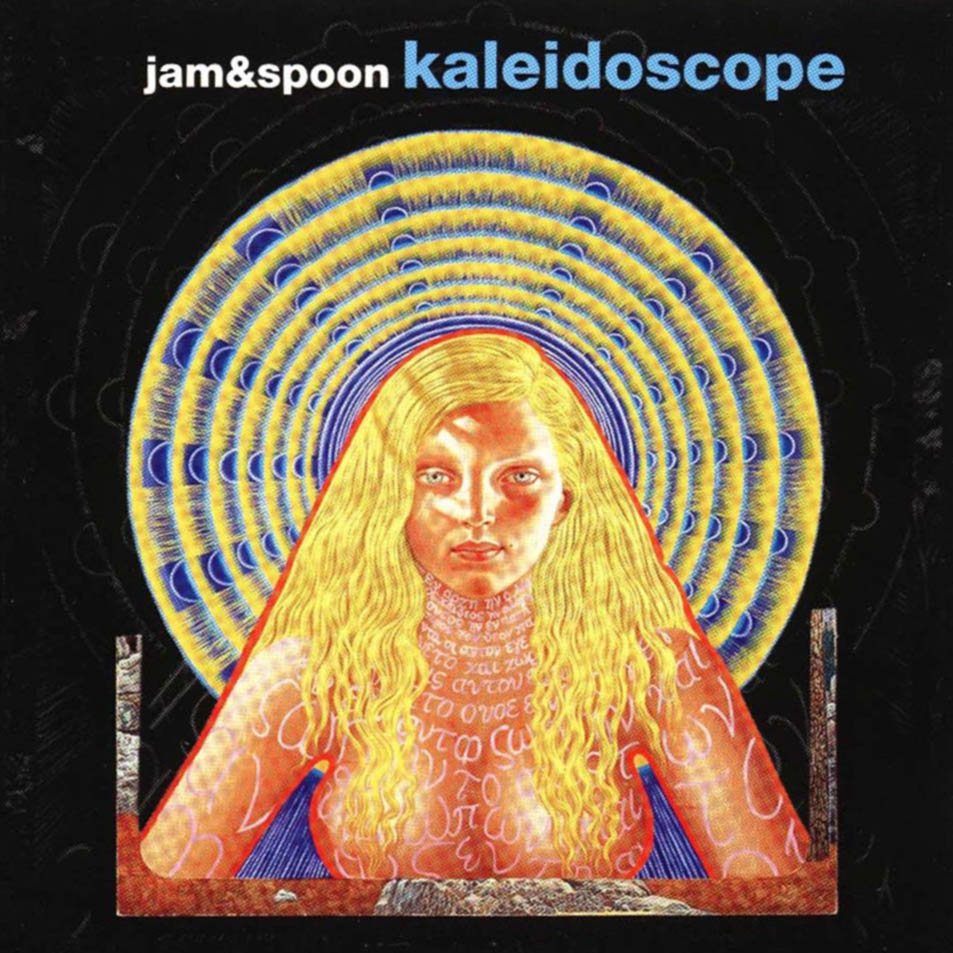
Discography Rediscovered: Jam & Spoon's "Kaleidoscope"

After a long hiatus, the Discography Rediscovered series is back. This time I'm taking a listen to Jam & Spoon's 1997 album "Kaleidoscope".

I first heard this album my freshman year of college. My roommate at the the time (Hi Joe!) was big into electronic music, I think we were still calling it 'techno' back then. He belonged to one of those old monthly CD subscription clubs (remember those?), and he would periodically get a few CDs delivered to him. One day he received Kaleidoscope. I remember enjoying it at the time, but my roommate did not and he never really listened to it again, I think he might have even trashed the thing, I don't really remember.

I had the album in the back of my mind whenever I would visit a record store (remember those?), but I could never seem to find it. Then one day, possibly on a break from working summer camp, I found myself at Streetlight Records in Santa Cruz perusing the electronic music section and I spied this album sitting there. I promptly scooped it up and have been pleased ever since.

It's hard to find a whole lot of info on Jam & Spoon. They were a German duo who, according to AMG were "pioneers of trance" in the early 90s. Recently I learned that one of them, Markus Loeffel (last name there being German for 'spoon'), passed away a few years ago at age 39. Too many drugs one would think.

Back to the album at hand: Kaleidoscope isn't rated all that highly among Jam & Spoon's works, and I realize that on some level it's not necessarily an amazing or profound piece of work. At its core it's just an easy album of light trance, complete with light dance beats and a sexy sounding woman singing vocals. It's such an easy listen that I would venture to say that I probably listen to this album from start-to-finish more than any other album in my collection. I can put it on track one and just let the whole thing play through. It's got a great flow, moving from mid-tempo dance numbers to moody experimental pieces, and back again.


I have no idea what inspired Jam & Spoon to make this album, but if I had to concoct a story, I'd say that Mr. Jam and Mr. Spoon had just gotten back from Ibiza having enjoyed plenty of time listening to Spanish guitar while sipping mojitos on the beach (after a long night of clubbing). The whole thing has a laid back vibe and features plenty of Spanish guitar. Just listen to the opening track Garden of Eden. It's like I'm there on the beach while Santana plucks at his guitar in the background.

The album is helped by the aforementioned sexy sounding female vocalist, Plavka. (Damn if she doesn't look sexy too). She just makes the whole thing all the more enjoyable. Her vocal skills aren't going to blow you away or anything, but she provides just the right amount of sultriness to keep you listening.

The entire album just flows nicely. After the first track we get the two 'hits' of the album Kaleidoscope Skies followed by the dancy Right in the Night (Fall in Love with Music), which really seems so incredibly tame compared to modern dance tracks. Soon we get into something a bit more experimental with the superbly named Warm Dead Dog. Next up is Flame, which just screams "put this track on while you make out!". Later we get El Baile, which features a Spanish guitar loop while some guy yells commands to dance in Spanish, gradually becoming a more trance infused affair. Near the end of the album we get Mark Runs the Voodoo Down, which evokes a great late night mood with it's use of saxophone. Finally we get the duo I Pull My Gun Once and I Pull My Gun Twice, which consists of a ridiculous sounding German repeating the lines "I pull my gun once/I pull my gun twice/I pull the trigger to your head/because it feels so nice" while a monstrous guitar plays which gradually gives way to some trance.

There's really nothing extraordinary about Kaleidoscope. I don't think it broke any boundaries or was even particularly noted among fans of 90's trance. It's just an easy listen. The music is never terribly complicated and the dance tracks feel light and breezy, as well as dated, compared to anything you might hear nowadays in the electronic music scene. This is a great album to listen to while tripping out, making love, on a long car trip, or just relaxing.

I had a friend looking for this album for years with no luck, I think it might never have had a proper American release (my copy has some German on it which makes me think it was printed there). In fact, it seems difficult to find any of their albums. I would reckon that the copy I found at Streetlight was just some import someone had sold to them (maybe through bizarre serendipity it was my roommate's copy?). The last time I heard anything from Jam & Spoon was when I was in Austria and they released an album that featured a few guest vocalists. The one track worth listening to off that album is Cynical Heart, featuring Jim Kerr, who you might remember was the lead singer from Simple Minds.

Monday, August 22, 2011

Discography Rediscovered: Trance to the Sun's "Atrocious Virgin" (2001)

Here I am again with a long overdue installment of Discography Rediscovered, the series in which I look back on older albums in my music collection. This time I'm taking a look at Trance to the Sun's magnificent "Atrocious Virgin".

I happened upon this album by complete and total chance. Working at my college radio station my senior year we received hundreds of albums by various labels in the hopes we'd give some of them airtime. I never had the privilege of listening to these albums, that was handled by higher ups, and frankly I didn't care because all I wanted to play was goth/electro songs I was familiar with anyways.

One day I saw this album sitting in the throw-away bin, someone having given it a listen and decided that it stunk. I saw the cover and something about it grabbed me. I thought it was by a trance group, but the art conveyed a more artful/indie band. I fished it out of the bin, took it back to my dorm room, and discovered one of my favorite albums.

I discovered that Trance to the Sun are very much not a trance group. Instead it's akin to goth rock but with more electronics and a heavy dose of psychadelic rock, with a bit of a shoegazing vibe. The center of the band is the intriguingly named Ashkelon Sain, with various females on vocals depending on album (this album features Ingrid Blue on vocals). Atrocious Virgin, I would learn, was to be the last album by this group.

Apparently the band had been around for most of the 90s but I'd never heard of them. In fact, most people in the 'goth' scene aren't very familiar with them either, and it's virtually impossible to find their albums, even through file-sharing sites (alas I'll probably never get my hands on the"Florakleptononomy" live album).

Back to the album. It's a perfectly crafted album with dense layers of music. The songs vary from energetic rockers such as "Thistle Lurid" to slow, plodding instrumentals (such as "Icicle Song" which comes immediately after, and perfectly compliments, the former track). The whole thing is held together beautifully by Ingrid Blue's lyrics. She sounds like Lewis Carroll's Alice gone all dark and moody. While I love Blue's lyrics and voice, I could see this as a point of contention for some. If you're not into moody goth lyrics pondering death, with vocals that at times sound like a little girl (see reference to Alice above), and at times which are hard to discern, I could understand not liking them.

The production on the album is also quite a feat. The liner notes state that the album was recorded and put together over the space of a year, but you could never tell. There's something Ashkelon Sain has done here that makes the album sound like it was recorded live right in front of you in the studio. It's really phenomenal.

I'm a sucker for long, drawn out songs with multiple movements (such as Jim Steinman produced Sisters of Mercy albums), and Atrocious Virgin does not disappoint. The final track, "Song of the Silent Crew" clocks in at an impressive 17 minutes, with parts ranging from goth rock, to drum circles, and back to psychadelic rock. In short, the song would be great to drop acid to.

However, my favorite track, at a mere 11 minutes long, is "Horse Head Lake". Taking a good five minutes just to get to the first verse, Horse Head Lake is a terrific odyssey of sound, from the opening strums of the guitar, to a short spoken segment by whom I presume is Mr. Sain, to Ingrid Blue's lyrics, to the ending minute consisting of the sound of distant rain, this is just such a fantastic piece of music. Alas, the only version I can find online is a condensed version that drops those first five minutes, listen to it here.

If my review hasn't piqued your interest, then maybe Tom Schulte from AMG will. He writes, "Trance to the Sun continues where the Syd Barrett-era Pink Floyd left off. A dense swirl of guitar dissonance, synth, and drum machine lying under the haunting voice of Ingrid Blue... this is an audiophile psychedelic comeback experience worthy of comparison to Pink Floyd's Meddle." Since I'm not nearly as familiar with Syd Barrett-era Pink Floyd as some of the folks here at this blog, I'll leave you to decide... if you can actually find the damn album (and speaking of Pink Floyd, here's a cover off a previous album of Set the Controls for the Heart of the Sun). Regardless, this is really one of my favorite albums in my collection, one I keep coming back to again and again.

Recommended tracks you can actually listen to:
Sleeping with the Natives
Thistle Lurid
Horse Head Lake (short cut)
Homewrecker (live)

Friday, December 17, 2010

KMFDM's "Angst" (1993)

Next stop on my tour of re-discovery is KMFDM's sixth album Angst. It was the early 90s and industrial music was just about to hit its mainstream stride with Nine Inch Nails opening up the floodgates for a slew of me-too imitators. Lest you think that KMFDM were part of this ride, they had at this point actually been chugging along for nearly ten years.

KMFDM were originally founded on leap day 1984 as an art performance outfit. Over the course of several albums the band morphed into an industrial music outfit, but an industrial still very much rooted in the 80s - meaning their songs contained little emotion and had more of a socio-political bent, with a lot of synthesized blips and bloops and very little guitar. While this stuff was OK for the time, I do particularly like several of the songs off of their previous album Money, it wasn't necessarily memorable.

Angst changed all that by, well, basically adding more guitar (in today's internet fueled world someone would say needz moar guitar!). Not only that, but with this album I contend that KMFDM perfected the formula they had been working on for the past decade. They added stronger political messages, stronger female vocals, nearly perfected their sloganeering, and really just reveled in tounge-in-cheek humor.

Many people's first question is "What does KMFDM stand for?" While you can find nearly endless speculation, anything from Kill Mother Fucking Depeche Mode to Keep Madonna From Doing Music, the real words are Kein Mitleid fuer die Mehrheit, or, No Pity for the Majority. While this sounds like a strong, nearly fascist, viewpoint, especially considering that the phrase is in German, KMFDM really walk a fine line between the political and outright humor, often jumping back and forth in the same song.

The other thing I really dig about KMFDM is that it's essentially a constantly shifting group of collaborators. At it's heart is Sascha Konietzko and, until recently, En Esch. While Sascha is sort of the heart of the band, there are countless other contributors, changing with each album, almost like some artists collective. They're like the Wu-Tang clan of industrial. Everybody's there, from members of former rival industrial groups to Italian female lounge singers. If you want to be in KMFDM it would seem that all you need to do is pretty much call up Sascha and ask.

The band also has a knack for formula and meme-inducing repetition. The most noticeable are the album covers. All of the band's album covers (except one) are done by the same artist, Brute, with a simple square cartoon featuring overly stylized people, with the bold KMFDM printed at the top and the five-letter album name at the bottom. Yes, KMFDM loves their five letter titles, something they carried through until only recently when I think Sascha just got tired of or ran out of remaining five-letter words.

The band also likes to mention their name a lot in songs, something some reviewers find annoying, though these reviewers are completely missing the humor. Another formulaic element of their albums include the aforementioned sloganeering, with particular lines from older songs being reused and re-chanted in later albums, to the point where a fan would almost be disappointed if an album didn't include somewhere the Jamaican voiced sample "Black man/white man/rip the system". It's like expecting to see Hogwarts in a Harry Potter movie.

I also enjoy how KMFDM utilizes female vocals, something I don't think I've ever heard any other industrial band do, or at least do effectively. I love the contrast between the industrial rhythms and the female voiced melodies.

Okay, so what about the music? Like I said, Angst relies heavily on guitars, so it can come across a little 'metal' at times (though no metalhead would probably ever consider the group metal). The album begins with the song Light (five letters!), a perfect example of everything I've been talking about so far. KMFDM self name check? Tounge-in-cheek humor? Female vocals? References to previous songs? En Esch saying mysterious sounding things in German? They're all there! The song is basically a pun on the idea that what you are getting is KMFDM lite (We keep simple/tough and outright/easy to swallow/KMFDM light!).

Arriving instantly on the heels of Light (remember what I said in my last post about album flow?) is A Drug Against War. One of the only two songs by KMFDM to ever get any airplay, A Drug Against War is an insanely fast paced shout-along. Listening to it you're bombarded with a barrage of sound clips dealing with war and violence, taken from god knows where (the best one is 'bomb the living bejeepers out of those forces').

Blood (evil mix) is a mid-tempo guitar grind that fans appreciate, but isn't terribly remarkable. And don't ask me why it's the evil mix because I have no idea.

Lust is a strange little number that's a slice of dancy-disco infused with German lyrics I've never quite understood, but it's kind of fun and funky.

Glory (five letters zomg!) is a great example of KMFDM's strong yet strangely ill-defined political leanings. It's a rant against fat-cat politicians, fair enough. But it's always hard to read KMFDM. Are they advocating collectivism, or are they Tea Party get-off-my-property individualists? I've never really been too sure.

The album moves along from there with the tracks Move On, No Peace (featuring an organ!), and A Hole in the Wall, all good songs if you're a fan of KMFDM, though I wouldn't recommend them as introductions to the band.

Near the end of the album we get KMFDM's ultimate self-referential and self-deprecating masterpiece, Sucks. Essentially a three and a half minute song covering all the reasons KMFDM sucks, it's not high brow or necessarily witty, but it's the perfect example of the band at their sarcastic finest. Sample lyrics:

"Our music is sampled, totally fake/it's done by machines 'cause they don't mistakes"

"We don't like Michael Jackson, we hate Depeche Mode/We don't care for Madonna or Kylie Minogue" (strange that nearly 20 years later those artists still have relevance)

"You might think we're stupid but we're way above it/We don't give a shit and the kids just love it!" (the 'kids just love it' part would go on to become another KMFDM slogan, most notably on the song Beast)

"KMFDM forward the ultimate sound with a message from Satan if you turn it around" followed by the sound of Satan leaving a nonchalant message on an answering machine (get it?). I just always got a kick out of this one.

So yeah, Sucks could be seen as KFMDM's love letter to the fans, a sort of 'thanks for sticking with us' ode to themselves. Or their just assholes looking for money. Whatever.

The final song on the album The Problem is perhaps the most interesting song on the album. I, and many of my fellow high school KMFDM listeners, thought it was the worst song on the album. Some still do. Increasingly I think the opposite. Sung by Dorona Alberti (who now is apparently a jazz lounge singer) the song is a definite departure from KMFDM's usual sound, and it's utterly amazing to think that it shares the same album with A Drug Against War. It's a poppy song about how a kid's problems aren't really his, but a problem with the system (so that makes KMFDM advocating collectivism, right?). I used to hate this song cause I thought it sounded like some sort of Mariah Carey pop song. Now I see it as a song where KMFDM get to show off a different side of themselves (or really Sascha does), and it acts as a nice cool down from the rest of what preceded it. Anyways, it's definitely worth taking a listen to.

Overall Angst is still my favorite KMFDM album. A total departure from the emotionally wrought albums of Nine Inch Nails, I listened to Angst a lot in college at a time when I was forming my political views. After college I turned to yet another acronym infused band (I do seem to have a thing for them) with VNV Nation, but that's not part of this re-discovery.

Tuesday, November 16, 2010

Nine Inch Nails' "Pretty Hate Machine" (1989)

My first entry in Discography Rediscovered is the album that inspired me to write this series. To begin with, Pretty Hate Machine was pretty much my favorite album growing up as a teenager. It's electronic beats fueled my teenage "no-one-understands-me" years. This album had all a teenager could ask for, anti-establishment messages, angst-ridden rants, longing-for-love ballads, and plenty of pent-up sexual frustration.

Nine Inch Nails (NIN) is basically the stage name for Trent Reznor. The All Music Guide says that Nine Inch Nails (or the lower case 'nine inch nails' as most fans prefer) was the most successful industrial group of all time. Pretty Hate Machine was Reznor's first album. The story goes that Reznor was working as a janitor at a recording studio and would use the space to record the album in his free time. According to Wikipedia Reznor was inspired by Prince, deciding to play almost all the instruments himself (coincidentally Reznor has a brief cameo as one of the bands in the film Purple Rain). After shopping around his creation he signed with TVT Records and went on to release the album.

And boy oh boy, as a (former) long time fan of NIN I will argue with anyone that Pretty Hate Machine is their best album. For a first album it's an amazing bit of work. All of the songs work, their order is impeccable, and the whole thing is short enough that it's easily listened to all the way through and doesn't bore the listener.

Ok, so listening to it now I realize how much the content of the lyrics don't really resonate with me anymore. Trent Reznor has always played the moody, misunderstood, love-scorned teenager to perfection. It's weird to think he was in his early twenties when he wrote this thing because by the time I was that age I was definitely out of my teenage angst phase, but Reznor continued with this shtick at least through 1999's The Fragile, which is the last album of NIN that I gave a real listen to.

That the songs are little angst-ridden pieces for lonely teenagers does not at all however prevent my continued enjoyment of this album. Like I said, every song is crafted so well. Reznor has a remarkable ear for production, each note, each beat, each industrial blast of noise, even the delivery of the lyrics, are all so pitch perfect. This attention to detail would later catch up with Reznor, holding back the release of The Fragile for several years as Reznor was reportedly a utmost perfectionist who would spend hours working just to get one little sound right.

Let's get into the actual music, shall we? Pretty Hate Machine starts off with one of NIN's most enduringly popular songs, Head Like a Hole. This is the song that pretty much gave NIN a following. I'll just quote AMG's review of the song:
Although the song was a ranting diatribe against corporate and commercial greed, "Head Like a Hole" wasn't really a political critique; the song didn't revolve around carefully considered ideas as much as the force and drama with which Reznor expressed himself. His frothing invective against "god money" was delivered with a barely articulate rage -- growling, wailing, snarling, gnashing his teeth -- that made the song into grand theater. Plus, his backing music was immaculately crafted and produced, driven by a deliberate synthesizer bass riff and overlaid with various sound effects and treated guitars.
Yeah, that's basically it. It's an energetic piece that sets the tone for Reznor's style, showing how he takes the sound of industrial and fits it into the familiar verse-chorus song structure of popular music. Though this song is great, I find that I rarely listen to it, instead opting for some of the other, lesser known tracks on the album.

The second track is Terrible Lie, a mid-tempo accusation against a former lover for her 'terrible lie'. I want to stop here for a moment and mention that one thing I've always enjoyed in an album is when it creates a good flow. I especially love when songs flow from one into the other (one reason I love The Wall so much). Reznor is quite good at this - Head Like a Hole basically bleeds into Terrible Lie. This happens several times on this album, and is present even more in his later works. I'm not sure what about it that makes me enjoy it so much, maybe it's the feeling that the album was meant as a deliberate journey, not just a set of unassociated songs. Anyways, Reznor employs this effect well here and it's one of the reasons I enjoy the album as much as I do.

The third track is Down In It, perhaps the most ambitious song on the album. Looking for a late 80's industrial-pop song that utilizes elements of rap? Look no further! I'm not sure what Reznor was thinking, but it's a great little song that somehow uses a rap/rant structure that references nursery rhymes and children's sayings. And I think it's about drug use.

After this the album begins it's gloomy descent into Reznor's (supposedly) tortured psyche. Sanctified is a slow, moody piece with Reznor basically talking about how he feels that he will be, ahem, sanctified when he, uh, gets inside a woman. It works well in the album. After the energy of the first three songs it brings the energy down, setting up the mood for the album's gloomiest piece (which it deftly flows into without a pause).

Something I Can Never Have was the ballad for my teenage self. A slow piano plays as Reznor sings of some love he can never have. Oh man, it's dripping in full-on teenage "no-one-feels-like-me" depression. His delivery is spot on too. And to top it off it his use of the word "fucking" in the final verse made the song so that we couldn't play it in front of our parents or in public, giving the song a certain mystique that required us to be alone when listening to it, further adding to the drama and the depression (back to his delivery: I love how his voice is nearly cracking as he sings the final chorus, brilliant).

Kinda I Want To is one of the album's only weak points, but it works to bring the energy back, which is quite a feat after the previous song.

This is followed by Sin. It's an interesting enough song, but what I like about it is how it demonstrates Reznor's ear for production. I love the placement of all the sounds, especially with the opening and closing 'whooshes'. Plus the single for this song utilized one of the most interesting fonts I've ever seen (it reads 'sin').

I personally enjoy That's What I Get but it's again not the most necessary song and could be excised from the album without too much change.

After all this angsty depression and scorn can Reznor do something with some humor? Yes, yes he can. The Only Time is the album's only piece with a smidgen of humor. I love the opening lines:
I'm drunk and right now I'm so in love with you
And I don't want to think to much about what we should or shouldn't do
Lay my hands on heaven and the sun and the moon and the stars
while the devil wants to fuck me in the back of his car
Nothing quite like the feel of something new
I love the lyrics, the little bass guitar, and just the whole vibe of this song.

Finally, the album ends with Ringfinger. As a teenage this was my least favorite song, mainly because we all thought it sounded like disco. As an adult now I have a very different feeling, I really enjoy it and don't think at all that it sounds like disco. I also like how it devolves into a bunch of industrial noise which closes out the album.

I also want to stop and mention another album here. I recently got my hands on a digital copy of Purest Feeling. This is an unofficial NIN album that counts as a bootleg more than anything else. It's a demo version of Pretty Hate Machine and for any fan of NIN I highly recommend it. Not only is it a rough cut of PHM but it contains lyrics and even a pair of songs that never made it on to PHM. It's like discovering that there's an alternate version of your favorite album, complete with new songs, plus it's arguably a bit happier in tone. There's a different order to the songs, some of the staples don't make it (Head Like a Hole), and the audio quality of it sounds like Trent is performing live in front of you in the studio. It also relies heavily on sound samples, most notably from American Graffiti. The song Ringfinger here is called 'Twist' and instead of a song about commitment it's now about S&M bondage. Take a listen to Twist here, and the never released song Maybe Just Once here.

So what I have I rediscovered? Obviously I think the album is still fantastic. It doesn't sound dated and is still easily listenable. My only problem with it is that the lyrics don't speak to me anymore, they're just too dramatic and full of some sort of angst I just don't have anymore. It's a great album for a teenager, better than that Linkin Park those kids nowadays listen to (though if I were a teenager now I'd probably be listening to Linkin Park too). That's it for me this time, I'll (hopefully) be back later. After all, there's a whole closet of albums waiting to be rediscovered.

Thursday, November 11, 2010

Discography Rediscovered

Now that my final semester of school is wrapping up and I've got some more time I thought I'd inaugurate my return of leave with a new series. In "Discography Rediscovered" I'll be dipping into my music catalog and highlighting select albums that I used to listen to much more. Some of these albums may have stood the test of time, others might be silly or just plain bad. And be forewarned: Most of my teenage years were spent listening to 90's industrial and alternative rock.

I was taking a listen lately to some albums I used to listen to in high school and was contemplating my teenage-self's musical tastes. One thing I've noticed is that I find most of these albums are still damn good. I'm not sure if that's due to me having liked them previously or if these albums are actually good. Regardless, I'll point out some of my old favorites and see how they fly. First post in the series coming soon!