So much '90s R&B makes me want to reach for the hand sanitizer. When I listen to "Come Back To Me," here's what I'm wondering: why didn't R&B move more in this direction? Lush, classy, soft, hypnotic, melancholy ... could've happened, but I guess it just wasn't in the cards. A few artists might have picked up on this sweet, autumnal sensitivity, like P.M. Dawn and ... well, P.M. Dawn. You know, R&B that I might want to listen to in my bedroom as I fall asleep at night? I feel like even the ballads in '90s R&B mostly ended up being about fucking. It was R&B you'd listen to in your bedroom as you fell asleep at night ... after having fucked somebody. And Janet went right along with it!
I like to think of "Come Back To Me" as Rhythm Nation 1814's "Let's Wait Awhile." Both songs are (essentially, if one ignores Rhythm Nation's "Interlude: Livin' ... In Complete Darkness") the second-to-last songs on their respective albums, both songs are the gentler, more downbeat, G-rated counterparts to the raunchier, more sexually fulfilling tracks that follow them, both songs wrap Janet's lead vocals in a dreamy, scintillating mass of background Janets, both songs peaked at #2 on the Hot 100, and both songs sound, to these ears at least, like they were recorded and released much later than they actually were. For years I thought "Come Back To Me" might have been a track from janet., or hell, even one of those new tracks from Design of a Decade. "Come Back to Me" sounds like a song from 1995, not 1989. Anita Baker's "Giving You the Best That I Got" - now that's an R&B song that sounds like it's from 1989. Wait a minute, wasn't I just saying that '90s R&B didn't sound like "Come Back to Me"? I guess what I'm saying is that a lot of R&B-adjacent mid-'90s balladry sounded like "Come Back to Me": think Madonna's "Take a Bow," or Toni Braxton's "Breathe Again." But those songs sort of plodded along. They didn't carry the same air of mystery, of evocative atmosphere, that this one does. "Come Back to Me" is like the Perrier of R&B ballads.
Those mainly familiar with the single mix ought to get their hands on the album mix, even though the end of the previous track, "Lonely," lingers a half-second too long on the CD edit (in true "listening to the Abbey Road medley on shuffle" fashion). Because, for my money, as with "Escapade," the most melodically haunting section of "Come Back to Me" is the bridge, and like "Escapade," the album mix of "Come Back to Me" opens with that sweet, sweet bridge. Remember that quasi-trend on several hits from the Summer of '88 I attempted to describe as "the Egyptian thing"? The bridge on "Come Back to Me" is so damn Egyptian, I can practically hear Omar Sharif on backing vocals.
But there's another element besides the chord progression or the vocal overdubs that provides "Come Back to Me" with its stately grandeur. Only after reading the Wikipedia article did I hone in on what might separate the song so thoroughly from its late '80s peers: the strings. Per Jimmy Jam:
"At the time we did it, it was one of my favorite songs. I loved the lyrics and the vocal on it ... the interesting thing [...] was the live strings ... I never heard the strings when we were doing it. We'd kept it simple, and Janet said, "It'd be great to get some strings on this." There was a guy in Minneapolis [arranger Lee Blaske] who was an incredible string guy. He arranged a lot of our string stuff. I said, "Hey, Lee, come up with a string thing for this," and he did. We loved it so much that the end of the song, it basically fades out with just the strings as the last thing you hear.
Yeah. Oh yeah. And the ambient rain sound effect doesn't hurt either. Also, when I learned on Wikipedia that Janet recorded a Spanish language version of "Come Back to Me" titled "Vuelve a Mi," my brain initially read that as "Vulva and Me," which perhaps could have been a track from her more explicit Velvet Rope era, but probably would have been out of place on Rhythm Nation 1814.
Even the video (featuring the album mix) feels more like a 1995 video than a 1990 video. This wasn't some low-budget, "splice together a bunch of live footage in a panic" hack job. Oh no. This was filmed in a little city called "Paris," and it's littered with shots of sexy Parisian statues and sexy Parisian rail cars and sexy Parisian apartment buildings (one of which, I'm guessing, the key dangling from Janet's ear supposedly unlocks?) and sexy Parisian lovers' spats on a staircase involving a hurdled shoe. This video's got class up the wazoo. I haven't done the research, but I'm fairly certain this is the last time Janet appeared in a video wearing an overcoat. I hope she donated it to a good cause.
So, my favorite singers. It's funny who might make the list. Not necessarily the singers who would normally appear high on perennial "Greatest Singer" lists - Frank Sinatra, Ella Fitzgerald, Barbra Streisand, Tony Bennett, Aretha Franklin, Whitney Houston, Michael Jackson, Mariah Carey - although some of them might. Not even necessarily the singers who I would count among my favorite musical artists: Paul McCartney, Elton John, Mick Jagger, Robert Plant, David Byrne, Morrissey, Liam Gallagher. I mean, I'm sure I enjoy those voices on some level, but it's not precisely the voices that I connect with. No, my list of favorite singers is even more random than that.
Here's what makes a singer's voice qualify as a "favorite" for me: when I feel like I can hear a part of my own personality in that voice - be it sadness, rage, uncertainty, steadiness, etc. It's when I hear certain voices and they feel like a warm hug being wrapped around my soul. These are the voices that make me feel ever-so-slightly more connected to the human race - a connection that, at times, can feel rather tenuous. Some of my favorite singers are quite highly regarded as singers: Stevie Wonder, Elvis, George Jones, Karen Carpenter, John Lennon, Etta James, Brian Wilson, Ray Charles, Brenda Lee, Bobby "Blue" Bland. Some of my favorite singers have often been called outright "bad" singers: Neil Young, Tom Waits, Johnny Cash, Roger Waters, Donald Fagen, Joe Jackson, Leon Russell. Sometimes, I just plain like the sound of that singer's voice, even when the song they're singing stinks. But the one quality that I think all my favorite voices share - for me at least - is a sense of directness. When I am listening to these people sing, I feel like there is nothing standing between their being and my being. There's no artifice. Even when they're phoning it in, I feel like I am always getting the full "them." Also, I can pick out their voices in about five seconds flat. They may have had their influences, but somehow, someway, I always know that it's them.
I think it's accurate to say that, in her youth, Belinda Carlisle didn't possess a conventionally "strong" voice. She wasn't what you might have called "versatile." She probably wouldn't have cut it in any scene other than the punk/new wave scene. So why is it that the mere sound of her voice makes me feel all warm and fuzzy inside? It's the kind of voice that I had always subconsciously liked, but I had never really given much thought to until I went on my unexpected Go-Go's binge roughly ten years ago. Even on the earliest Go-Go's songs, Belinda's voice always had that little vibrato, or "quiver" or "tremble" to it. In wondering where that vibrato might have come from, I think back to the terror she might have experienced as a child wondering whether her drunken stepfather was about to beat the living shit out of her or not. That could have had something to do with it. All those childhood fears may have become embedded deeply into her bones. To paraphrase Pete Townshend (another "favorite" singer of mine whose voice probably wouldn't be considered conventionally "good"), "sickness can surely take the voice where voices can't usually go."
This anonymous person who commented on an old AV Club article about Beauty and the Beat that was published several years back knows what I'm talkin' 'bout:
Carlisle is obviously my favourite Go-Go (because Wilma vs. Betty is not even a choice since you're obviously gonna go with Wilma every time). I love her voice. I have a thing for raspy female voices that sill sound feminine (listen to the choruses in "Runaway Horses", the song). Her voice is a mix of Bonnie Tyler, Janis Joplin, Stevie Nicks, Siouxsie Sioux, Chrissie Hynde, Debbie Harry, and Dolly Parton. The thing about her voice is, it's not a pop voice, it's a raspy rock and roll voice (listen to the Go-Gos' version of "I Wanna Be Sedated" from the 2001 concert in Central Park). But it's not as harsh as most female rock voices, so you do buy her as a pop singer in the same way you buy Pink as a pop singer. Or I guess a better way to put it would be that Carlisle straddles the fence between pop (solo) and rock (with the Go-Go's) and is a bit too rock for pop music and bit too pop for rock music. But yeah, Carlisle rocks. She may be one of the only women in music who came close to matching Keith Richards' level of drug abuse/partying and came out the other side with her sense of humor (and everything else) intact.
Yes, like Keith, she is truly a modern miracle of science and biology.
Sure, her singing style is not everyone's cup of tea. I can understand someone actively disliking her voice (her detractors have not been shy to make their presence known on YouTube). She's not a "properly trained" vocalist ... but that's a good thing! The great ones either got it or they don't. Witness Madonna after about 1986, who has tried so incredibly hard to train her voice and to become a "conventionally great" vocalist, and yet ... I don't get the warm fuzzies from just the sheer sound of her voice like I do from Belinda's. That voice is like a trusty friend - and it might have been a trusty friend to Belinda too. One aspect of her career (out of many) I find highly amusing is that, while she went through about sixteen different physical transformations, eighteen different hairstyles, and fourteen different hair colors, whenever she opened her mouth, no matter what phase she happened to be in, that same fucking voice would come out. It was her North Star, her Big Mac. (Another irony is that, at the peak of her recording career, she didn't think much of herself as a singer, but now, in her later years, I've noticed that she has finally discovered her singing "self-esteem" and that she puts a lot more thought and effort into her singing ... even though her voice has aged and doesn't sound like it once did. But, them's the breaks.)
I write all these observations as a prelude to a discussion of Belinda's less-than-impressive vocal performance on a demo of the song "Waiting for a Star to Fall."
Flying in straight from a rejected sitcom pilot near you, allow me to present Boy Meets Girl's "Waiting for a Star to Fall," a 1989 #5 hit that I didn't care for much at the time, which, considering I had the taste of a nine-year-old, was a fairly harsh verdict. Yes, even back then, the tune struck me as an over-calculated piece of radio product, utilizing a corny metaphor (stars are actually massive bodies of gas that burn out over the course of billions of years, and don't technically "fall" anywhere), self-consciously dramatic pauses, and a TUKC at the start of the sax solo (to be fair, the key change usually comes after the solo, so I guess they were trying to shake things up a little?). I just find something so artificially "sloppy" about the chorus: "Carry your heart into my arms, that's where you belong, in my arms, baby, yeah!" with the whole "arms, baby, yeah!" bit coming off to me like a freeze-dried, pre-packaged Robert Plant ad lib - tacked on for a touch of "spontaneous" flavor, but ending up tasting like undercooked microwaved Swanson's pot pie? And they apply this little "delay" effect to the lead singer's last "yeah" so that he appears to sing it twice, as if he's so smitten by this overpowering crush of his that he can't even deliver his words on time. I can see why the song was a hit, and I can also see why the radio quickly banished it to Siberia right around, say, February of 1991, presumably for all eternity, only for the mutant robot remnants of the track to return with a vengeance in the UK circa 2005 as "Star2Fall" by Cabin Crew, "Falling Stars" by Sunset Strippers, and "In My Arms" by Mylo. Moral of the story: you can try sweeping those '80s ghouls under the carpet, but eventually, their dusty remains will morph, shift, coagulate, and re-emerge to terrorize the world once again in kitschy electronica form.
But let's go back to the original culprit. If you're listening to "Waiting for a Star to Fall" and thinking, "You know, this kind of sounds like a Whitney Houston reject," well ... from Wikipedia:
Boy Meets Girl is an American pop-music duo consisting of keyboardist and vocalist George Merrill and singer Shannon Rubicam. They are perhaps best known for their hit song "Waiting for a Star to Fall" from 1988 and for writing two of Whitney Houston's number one hits: "How Will I Know" and "I Wanna Dance with Somebody (Who Loves Me)."
Oh. I've heard of those. Wikipedia goes on to mention that "Waiting for a Star to Fall" was "inspired by an actual falling star that Rubicam had seen during a Whitney Houston concert at the Greek Theatre in Los Angeles." Well there you have it, the stars were literally aligning for Merrill, Rubicam, and Houston to score their third #1 single, and then ... Houston's manager, the one and only Clive Davis ... didn't like it. He said that it "didn't suit her." Why the hell not? It sounded just like the other two songs. Guy was nuts, but anyway. We're not here to talk about Whitney Houston. Oh no. We're here to talk about the next singer to whom the song was offered.
According to Wikipedia: "The song was then offered to and recorded by Belinda Carlisle for her 1987 release Heaven on Earth, at the insistence of her label, but Carlisle disliked it and refused to include it on the album. This version has, however, circulated on an unofficial compilation of that album's outtakes."
[twirling mustache] Oh reeeeeally. All right, YouTube, I know you're going to come through for me here.
That's what I'm talking about. Let me guess how this went down:
"Belinda, we've got a hot new song, it's from Whitney's people, but she doesn't want to do it, come on, it'll be huge!"
"Uhh, I dunno guys, it's pretty cheesy."
"So were all the songs on your last album, like 'I Feel the Magic' and 'Shot in the Dark,' I mean, why stop now?"
"Well, if Whitney didn't want to do it, then why would I want to do it?"
"Belinda, baby, we're your record label! Have we ever let you down?"
"Look, I don't think it's for me. Can we just pass here?"
"Tell you what. At least do a demo of it, all right? One lousy demo. Let's just see what we've got here, see what it sounds like. Do a demo and then we'll talk. Capice?"
"OK, fine. If I do a half-assed demo version that's totally fucking terrible, then we can move on to something else?"
"Deal!"
And so, somewhere beneath 200 tons of tape hiss, we have Belinda's demo version of "Waiting for a Star to Fall." You know Plato's concept of the Cave, which posits that most of what human beings actually perceive is merely a shadow of reality being projected onto the wall of a cave? Well, this demo's backing track sounds like the shadow of an actual recording, projected onto the wall of the recording studio's cave. And then we have Belinda's vocal performance, which I presume was given at gunpoint, as she sounds like a woman undergoing extreme discomfort and duress. Your mother singing "Waiting for a Star to Fall" in the shower would have probably sounded more confident than this. Bottom line: she just ... wasn't ... into it.
And yet! Several YouTube commentators have taken this less-than-stellar outtake as evidence that Belinda couldn't actually sing, but I think it might prove the exact opposite. For someone recording a practice vocal of a song she didn't like over a Casio-generated musical backing ... she sounds pretty good to me! Choice excerpts from the debate:
Belinda, go home. You're drunk.
Yikes! It's like a birthday cake with a big spider on it.
Waiting for this song to end.
1:43 is where I stopped hoping for a good part and just laughed my way through the demo.
It sounds like a cow being run over.
Hey Belinda, I love ya, you've got allotta my money in your pocket but thanks for turning this song down.
To be fair it's a demo but Belinda cannot hit the notes very well. Boy Meets Girl did it with passion on vocals and instruments.
This gives me hope that, being a total lay singer, my own singing isn't thaaaat bad after all. It's interesting how weak Belinda's vocals sound without fancy sound effects.
Belinda's vocals get cut a lot of slack due to her looks.
This needs like 500% more sax.
c'mon all!! This isn't that bad! It's pretty good!
Unpopular Opinion: I think this is good.
amazing what happens when you have to actually sing before all the editing to make you sound good is added in. I never knew she was actually a terrible live singer omg lol she''s all over the place, way out of tune
She's a very strong live singer, this song just doesn't suit her. Bear in mind too that this is a demo and could be 1 of many takes, check out some of her live video's she can really nail it.
I'm sorry but those making fun of her voice; she's by far better then any 'teen' singing now.
This was probably a scratch take rather than anything that was meant to sound decent. I mean, the backing music is just as bad as the vocal. If you watch videos of her live performances you can see she can actually sing. If she had done a version with a serious vocal and full-on instrumentation, I'm sure it would sound good.
This sounds like a practice recording while she's trying to learn the song.I wonder who released this,it appears they don't like Belinda.
There are so many negative comments. It's obvious she was just going through the motions seeing if she liked the song. I mean their are no real instruments even. It's all synthesized/drum machine junk. I love Belinda. Even with no auto tune or real musicians she sounds better than most, even good I will venture to say.
This was way too far from the finished product. Even if she had recorded it, it would have sounded much better than this. I do think it was more a Whitney song than Belinda. Having said that Merrill and Rubicam own it.
Belinda's lovely voice is the best thing about this recording. The musicians were farther off of their marks on this spiritless arrangement. Had they drafted a serious producer/arranger and put in some positive rehearsal time, they would have come away with the best version ever recorded. A sweet, yet tragic, orphan of the muse.
Do people not know what a "demo" is? It's a rough cut of a song before you go in the studio to fully record, polish and produce it. This song was thrown at her and she didn't want to record at all. For those comparing it to Boy Meet Girl, that's comparing apples to oranges - the original songwriters version of the song with full production (as everyone knows and loves) compared to a demo of someone who never wanted it. And thank God. This song has no place on "Heaven on Earth" at all and would've killed the album. Boy Meets Girl should be glad they got to keep it for themselves and have success with it. It's just the industry.
What a delightful little find! These days they auto tune the demos so it's kinda nice hearing a good old traditional slightly off key in parts grass roots demo - 80's style!
I pose that my demo from 1988 is better than Belinda’s version of this song...but barely
Here's the deal: as crappy as this demo is ... somehow, someway, I still feel the magic. I still feel the warm and fuzzies. That's the deal with your favorite singers: even when they're terrible, you love them regardless. It's like a marriage: for better or worse, for richer or poorer. If Belinda's voice is like a warm hug wrapping itself around my soul, this demo is more like a sweaty, gross hug after she's just come back from the gym. But I'll take it.
In the end, "Waiting for a Star to Fall" was simply "waiting to fall" into the hands of the duo who wrote it, providing them with the glory and status that they so richly deserved, and allowing Belinda to dodge a cheesy '80s bullet. Apparently, she just couldn't stoop so low as to record a peppy Whitney Houston reject. The woman had standards. I mean, it's not like she was filming Christmas ads for L.A. Gear or something. Oh, wait:
an exclusive right, privilege, etc., exercised by virtue of rank, office, or the like: the prerogatives of a senator.
a right, privilege, etc., limited to a specific person or to persons of a particular category: It was the teacher's prerogative to stop the discussion.
a power, immunity, or the like restricted to a sovereign government or its representative: The royal prerogative exempts the king from taxation.
"His what-ative?" No matter what any hot-shot Grammy-winning record producer might say while sitting behind a recording console in a VH1 documentary, let me tell you a surefire way to churn out a smash R&B hit: use a ten-dollar word that nobody else has ever dared to shoehorn into a pop lyric. Although the track's merits are many, I feel - when all is said and done - that this is the alpha and the omega of the majesty that is Bobby Brown's "My Prerogative." Janet Jackson and her little "Escapade" can go kiss Bobby's big fat linguistically-gifted ass.
As a discerning nine-year-old music listener, I knew a winner when I heard one. It was pretty simple. Guess how many other pop songs in 1989 featured the word "prerogative." Yeah, that's right, that would be ZERO. What in God's name was a "prerogative"? Was that like some kind of marsupial? An advanced branch of mathematics? But see, herein lies the genius of "My Prerogative": after one listen, anyone who didn't know beforehand what "prerogative" meant would have learned exactly what "prerogative" meant. What it means, in layman's terms, is that Bobby Brown can "dew what he wantsta dewww."
Given Mr. Brown's subsequent altercations with the law, I feel like "My Prerogative" has taken on a more sinister and disturbing air than it would have carried back in 1989. I pulled up Brown's Wikipedia page, looking for a quick refresher on the man's less than savory deeds, and I was confronted with a neatly bullet-pointed list than appears to be longer than the Lake Pontchartrain Causeway. What I'm saying is this: In 1989, I think Bobby was well within his rights to claim that things like "leaving New Edition," "sleeping around," "keeping the money he'd earned," and "making the kind of records he wanted to make" were certainly his prerogative. However, I'm not sure if it was truly Bobby's prerogative to:
Beat a nightclub patron in Orlando
Kick a hotel security guard
Crash into a condominium sign while driving drunk
Strike his spouse (a certain Whitney Houston) and threaten to "beat her ass"
Miss three months of child-support payments
And that's just a sample. In other words, what might have been seen at the time as "harmless and playful bragging" now has the whiff of "crippling personality flaw" to it. But whatever - it still slams!
With its minor key sax and/or synth riff, "My Prerogative" sounds like a hard-hitting new jack swing update of the Inspector Gadget theme - and let it be noted that co-producer Teddy Riley also co-produced Doug E. Fresh's "The Show," which explicitly interpolated said theme. Other R&B artists were inspired by James Brown, Marvin Gaye, Al Green; Teddy Riley heard the Inspector Gadget theme and knew where his destiny resided. At least "My Prerogative" is mercifully light on the quasi-rapping that, in my opinion, has not worn too well on other Brown hits of the era such as "Don't Be Cruel" and "On Our Own" (AKA "That Bobby Brown song from Ghostbusters II that I thought was unbelievably awesome at the time but, you know, I was nine years old"). No, "My Prerogative" has something even better: Bobby's gloriously bratty rant about how he "can't have money in my pocket and people not talk about me ... got this person over here talkin' 'bout me, this person ... I made this money, you didn't - right Ted?" Like many a legendary rapper to follow, I fear that Bobby greatly overestimated how much other people cared about all the hassles that resulted from his massive success. "What is this, a blizzard?" No, more like a persecution complex.
The video treats us to a sampling of the Bobby Brown concert experience, where he's flanked by a female sax player and a female keytar player, both sporting halter tops and hot pants, and both probably having signed contracts to keep any complaints to arbitration only. At 2:58 Bobby thrusts his body against Ms. Keytar and attempts to play a few notes, until she ducks and he swings his leg over her head to coincide with the line "Yo Teddy! Kick it like this!" I'm thinking that, ten years later, Bobby wouldn't have even tried to miss her.
Did Stock, Aitken & Waterman ever do anything useful, you ask? To which I say: Did you ever do anything useful? Go ahead, snicker at their entire catalog: "Never Gonna Give You Up," "I Should Be So Lucky," "Venus," "You Spin Me Round (Like a Record)" ... I needn't go on. Call them a slimy pimple on the pubescent face of '80s dance-pop, scoff at their ability to take their one solitary "120 beats per minute" production trick and shamelessly run it into the ground, throw virtually their entire discography into the proverbial garbage heap. But at the very least, with the last ounce of mercy in your cynical little heart, please, I beg you, if you give them nothing else in your entire life, you've got to give them "This Time I Know It's For Real."
It's funny to think that "This Time I Know It's For Real" only came out six years after "She Works Hard for the Money," and yet I suppose it qualified as a "comeback" single. Six years is like a fart in the pop music wind these days. I wrote in an earlier post that, as opposed to the vast majority of her peers, Donna Summer initially seemed to weather the post-disco comedown that was the '80s with popularity and credibility intact, but if so, well, to paraphrase Rick James, entropy is a hell of a drug. By 1987 she was playing footsie with the Top 40, peaking at #48 with singles like "Dinner with Gershwin," surely the best '80s R&B single to name-check Rembrandt, Mahalia Jackson, and Marie Curie in the same batch of lyrics (the song did better in the UK, hitting #13).
Honestly, I'm kind of digging this one! Brenda Russell, the song's author, almost made it into my Summer of '88 series with her sultry slow jam "Piano in the Dark," but, well, I had to draw the line somewhere. The point is, by 1989, Donna wasn't quite lighting up the dance floor like she used to - not like all those hip kids from Britain with their Linn drums and their high-waisted pants and their squeaky-clean videos were. No, "Dinner with Gershwin" wasn't quite the fitting last hurrah she'd been envisioning. So she shrugged her shoulders, looked around to see who was hot, and said, "Fuck it, I'll team up with those guys."
Funny story: though I had no idea at the time that "Got My Mind Set on You" was George Harrison's comeback hit, or that "Hungry Eyes" was Eric Carmen's comeback hit, I actually knew that "This Time I Know It's For Real" was Donna Summer's comeback hit (it peaked at #7 in the US and #3 in the UK). When I was a toddler in the early '80s, my family used to have a cassette copy of On The Radio in frequent rotation on the car stereo (I recall my father always trying to fast-forward through "Love to Love You Baby" in a panic). And yes, I knew that the Donna Summer on that cassette ... was the same Donna Summer that was having a comeback hit! (Amusingly, although I was extremely familiar with 'She Works Hard For the Money," I did not learn that that had also been sung by Donna Summer until many years later). At any rate, I remember being quite glad for the woman, even though I was only nine years old, and even though I didn't know her personally. It was a rare moment of empathy from my younger self.
I think there are a couple of reasons why "This Time I Know It's For Real" rises above the usual SAW fare. Reason #1 is that Donna Summer actually co-wrote it, which might explain the presence of some atypical chords and harmonic tricks. Oh, it still reeks of SAW all right, but the melody doesn't sound quite as recycled as the others do. Perhaps the greatest moment in Stock, Aitken & Waterman's entire recorded output occurs at the 1:11 and 1:56 marks, when Donna sings the chorus, except when she belts out "for real," the vocal melody rises while the keyboard melody dips, and something otherworldly occurs and the song just enters an alternate dimension of deliciousness. That is the moment. That is the peak of SAW's career, my friends, that exact harmonic bit. We're talking some serious "If I Fell" harmonic shit right there.
The other element that elevates "This Time I Know It's For Real" over SAW's endless stream of Rick and Kylie songs is that, well, Donna Summer is the one singing it. As rock critic Paul Gambaccini comments, with grudging respect, in the British documentary The Hit Factory: The Stock Aitken and Waterman Story (highly recommended if a) you can't get enough of Stock, Aitken & Waterman, b) you thought I was pulling all these songs out of my rear, c) you wanted to expand your knowledge of artists like Mel & Kim, Princess, and Sinitta, and d) you've got 47 minutes to kill): "For me their greatest record is the Donna Summer [one], 'This Time I Know It's For Real.' First of all, it is a great track. And it is a great pop song. But she is also a great vocalist." Indeed, Summer carries eons of dance music history inside her powerful pipes. And it seems to me she is fully aware that it's a comeback song she's singing. Call it the "Night Shift" effect. I mean sure, I can get down with Astley and Minogue as much as the next sardonic '80s music blogger, but they couldn't bring the same intangible aura of hard-won experience that Summer brings. For example, I have a hard time picturing 19-year-old Kylie crooning lines like "I've been around though long enough to know." Let me put it like so: with all due respect to "Dinner with Gershwin," this time Donna Summer knew her comeback was for real. And yet, she doesn't sound like an old fogie trying to hang with the teens. She still exudes energy and spunk. It's not a sympathy hit, you know? This was the final hurrah she deserved. When she holds that very last "for real" at the 3:11 mark, and holds it and holds it, I can practically feel her effervescent essence soaring into the Great Disco Beyond.
The video was apparently filmed in Dr. Frankenstein's laboratory, a constant stream of electrical bolts and laser beams pelting Donna and the dancers throughout, but perhaps it's keeping everybody on their toes. I get the feeling Stock, Aitken & Waterman were already working on a video for one of their crappier artists, and then decided to turn this into a Donna Summer video at the last minute, because there's an extreme "Nickelodeon after school special" vibe to this one, but at least they didn't force Donna to mix in with all the riff-raff. I love the dude wearing a bullfighter-style vest and hat along with some regular jeans. He runs in place like he's been waiting to run in place his entire life and is finally getting his chance. If he's not the same dancer who played the bartender in the "Never Gonna Give You Up" video, I'll bet he's at least that guy's cousin. Frankly, my favorite thing about the video is also my favorite thing about the song, which is Donna Summer. She loves the camera and the camera loves her back. She even looks good in a bowler hat.
Question: Would you trade American stardom for European stardom? Sub-question: If you had no choice in the matter, could you get used to it? It sounds to me like Belinda Carlisle never quite did.
Although she couldn't have actually known it yet, with Heaven on Earth and its accompanying worldwide #1 single, Belinda had reached the peak of her solo success. But if she didn't know it yet, she could certainly sense it. A pop music career is not a math equation. Just because your first album goes Gold, and your second album goes Platinum, doesn't mean that your third album will go Double Platinum. But it wouldn't be out of the question if it did, would it? From Lips Unsealed:
Though a number of major producers inquired about working with me, I teamed up with Rick Nowels again. For a second time I was in the studio trying not to think about the pressure and the high expectations. Yet the industry's reigning A&R guru John Kalodner laid it right out there by saying, "If Belinda gets this album right, she's going to be the biggest star in the world." I tried not to think about it, but I knew the opportunity was there.
"Belinda, baby, the world is your oyster! You could be the toppermost of the poppermost!" Uhh ... bigger than MJ? Based on what, exactly? Her wall-humping prowess? Well, either Belinda failed to "[get the] album right," or John Kalodner was talking out of his A&R anus, but if squint a little, you can kind of see where he was coming from. Belinda was just coming off an album that had produced three US and UK Top 10 hits, she had the looks, she had the pipes, she had the looks (on the Runaway Horses album cover, as a sweater delicately slides down her comely shoulder, the camera is potentially catching Belinda either in mid-orgasm or mid-fart - it's hard to tell and they both feel good anyway) ... the airwaves were hers for the taking. What she didn't have, of course, was ambition, but hey, that hadn't hurt her yet! At any rate, let's see how accurate Mr. Kalodner's prediction became:
Overall, we worked on the album as if money didn't matter. We took a year and spent close to $1 million. That may have sounded great in the press, but now when I hear something like that I know, because it was the case with my album, that it signals trouble. We second-guessed ourselves right and left and lost touch with the basics and ended up with an expensive album, not the great one we had hoped to make.
In September, "Leave a Light On" came out and was a hit everywhere in the world except the U.S., where it failed to crack the top 10, an indication that times and the music-buying public's taste had changed. When Runaway Horses hit the stores a month later, it opened well overseas but struggled here at home, needing six months to creep its way to a very disappointing peak of 37.
(Sad trombone.) #37? Daaaaaamn. That sure puts other notorious commercial "disappointments" like Tusk (which peaked at #4) or The Final Cut (which peaked at #6) in perspective. Even Queen's Hot Space peaked at #24. But leave it to the master of self-loathing to throw more cold water onto the fire than necessary. In Belinda's telling, "Leave a Light On" was "a hit everywhere in the world except the U.S.," but what she means is that it was a huge hit everywhere in the world except the U.S., where it was merely a moderately-sized hit, peaking at #11 - which ain't bad at all! Talk about changing the goalposts. And sometimes, an album's peak chart position doesn't tell the whole story anyway, because what Dottie Danger fails to mention is that, in the U.S., Runaway Horses still went Gold! In other words, plenty of people did ultimately purchase the album; they just took their sweet time in doing so. A Gold album is nothing to sneeze at. Talk Show didn't even go Gold. Besides, here's how I know the album found its way onto numerous American stereos: a couple of years ago I met a colleague on a theater project who claimed to have repeatedly performed aerobics as a youth while listening to Runaway Horses. I tell you, nothing gets the blood pumping like the red-headed roar of the Queen of Yuppie Rock. It's also classic how much she downplays the success of the album in Europe, merely stating that it "opened well overseas." The album peaked at #4 in the UK, #4 in Sweden, and #6 in Australia, essentially duplicating the success of Heaven on Earth. Runaway Horses was a blockbuster smash - just not in the country she was born in. But on the other hand, I know what she's saying. Her management and her record label were whispering in her ear as if the album was going to be the next Rhythm Nation 1814 or Like a Prayer, not R.E.M.'s Murmur. I mean fuck, in 1990, even Christmas albums went Gold. Belinda was not about to become Mariah Carey here.
Although I put on a positive face for the press, I was deeply hurt by the album's failure to live up to expectations. In many ways, it was my favorite collection of songs. Morgan counseled me to work at the things I could influence and let go of everything else. I tried. Some days I managed. Other days I was filled with anxiety and struggled with all of my issues.
Yeah, well, par for the course. It's also interesting that in one paragraph she says that she "second-guessed" herself and ended up making an "expensive" album and not a "great" album, and then in another paragraph calls the album "my favorite collection of songs," but Belinda is nothing if not a riddle of contradictions. Although I only got around to listening to the entire album about a year ago, frankly, I think it's a stronger overall album than Heaven on Earth! AMG gives it three stars and its predecessor four stars, but I would probably switch that rating around. No, it doesn't have that one single song that blows you away like "Heaven is A Place on Earth," but overall I find it more consistent, more adventurous, more ... not depressing exactly, but more tempestuous, mercurial. Runaway Horses, despite the thousand layers of studio gloss on it that Belinda apparently claims to regret, feels to me more like the work of the "real" Belinda. Sure, it's long way from "Skidmarks on My Heart," but let's just say that if your stock shares just plummeted and you're in the mood for a late night cruise through wine country, this is the album that begs to be blasted on your Mercedes stereo.
"Leave a Light On," "Summer Rain," and "La Luna" I already tackled, but get a load of these seven other goodies. The title track isn't quite a power ballad - it's more like an "energy saver" ballad, but as Belinda album cuts go, I say it's a keeper, with a chorus that inspires me to hoist my solar-powered flashlight high into the air. Even the key change, if predictable, still feels appropriate. "Runaway Horses" actually made some noise in the UK, peaking at #40. Let's just say these horses didn't exactly win the Kentucky Derby here. Besides, if you're riding "runaway horses," don't those horses actually belong to somebody? Wouldn't you need to give them back? The relatively uneventful video features Belinda in a wholesome peasant-style dress, leaning against a wall in the requisite abandoned house with crystal chandelier, as the shadows of horses prance around the room and sinister merry-go-round horses silently wait to pounce. A golden opportunity for further wall-humping, clearly wasted.
"Vision of You" hit #41 in the UK, but whoa, Darby Crash would not have been into this one. Get a load of this chorus: "Nobody's touch feels like your touch/Nobody gets to me that much/Nobody's kiss gets me inside/And I have no place to hide/Tell me what can I do/I have a vision of you." Generic, thy name is "Vision of You." I feel like even Streisand would have balked at these lyrics. It's a little too cliched and sedate for me, but judging by the YouTube comments (always an accurate barometer of public opinion), it has plenty of admirers. Let me just say that this is the video I posted back when I wanted to demonstrate how counter-intuitive it was that the singer of songs like "Vision of You" claimed Iggy Pop as her musical idol. Of course, Iggy Pop didn't look quite as good in a tight sequin dress (though I'm sure he tried).
"(We Want) The Same Thing" could be considered the album's big "rocker," Belinda's husky, lower-register delivery on the verses coming as close as this album gets to sassy, winking camp ("Here is my case/We've got no time to waste/'Cause we want the same thing"? "We're fighting a war/But we don't know what for/'Cause we want the same thing"??), but the chorus is sparkly and shiny and smothered in a thick wall of female vocals and bells and keyboards and it kind of sounds like a jingle for pantyhose but ... it's catchy. Good Lord, is it catchy. For those taking note, the single mix was even more violent and unruly, sporting opening chants of "Hey! Hey!," extra vocal overdubs, and more club-friendly percussive thumping. This one really caught the British public by storm, peaking at #6. Guess that remix did the trick?
So that's six singles that charted at least somewhere in the Western world, but I think where Runaway Horses has Heaven on Earth beat is in the relative strength of the leftover album tracks. And I mean "relative," because don't expect "Never Going Back Again" and "Oh Daddy" here. "Deep Deep Ocean" is like the lethargic twin sibling of "Leave a Light On," featuring the album's other George Harrison solo, and yet, despite being just a rat in a cage, listen to Belinda's vocals of rage! "Valentine" and "Whatever It Takes" is where the album and/or Rick Nowels start to lose me, but if you're going to lose the listener, you might as well do it around tracks 8 and 9, amirite? There's an octave jump on "Valentine" that I'm not entirely sure Belinda handles successfully, but did I ever co-write "You Get What You Give"? No, I did not. If Rick said it worked, then I guess it worked. There's also a synth solo that sounds like it left the apartment drunk one night back in 1985 and got lost for four years on its way back to the studio. I would have made a joke about "Whatever It Takes" resembling a bland Bryan Adams track, except the song literally features backing vocals from Bryan Adams.
Upon learning that the closing track, "Shades of Michaelangelo," features lyrics composed by none other than the artist herself (with music by her former colleague Charlotte Caffey), I was tempted to chuckle surreptitiously into my sleeve (so that Belinda wouldn't see my snark), but if I check my attitude at the door, I have to admit that the song is surprisingly soothing, spirited, and hummable. I'd say it kicks the crap out of the three cuts that proceeded it, at least. Maybe B.C. should have gotten off her ass and written more of her own lyrics - not because she was great at it, exactly, but because it apparently gave Charlotte the impetus to compose some excellent musical accompaniment:
A still life portrait of you by my window
Touched by an innocence now fading away
Into a quiet storm of the tears of the angels
Falling around me as I'm watching the days
I frame colors of passion against a fading sky
With a stroke of love on the canvas of my soul
I'm painting a perfect world with shades of Michaelangelo
It's a promise made to every heart that knows
We can live in a perfect world, with shades of Michaelangelo
I hear songs of children echo in the sky
I hear songs of children, a tomorrow so bright
But could she actually spell "Michaelangelo" correctly? Sure, these lyrics might be overly earnest and hokey, but are they any worse than the lyrics for, say, "Vision of You"? And while I feel like her singing on some of the album's tracks veers into wayward vibrato territory, on "Shades of Michaelangelo" she sounds clear and sweet and Go-Go-licious; I'm thinking that either she felt more at ease with her own lyrics, or that Charlotte had a more intuitive grasp of Belinda's proper vocal range than Rick did. Here's how she described the inspiration behind the track in an interview on The Arsenio Hall Show: "It's an environmental-type song, it's just how ... I look out my window, I have a garden and a hill, and just wondering whether it's gonna be there 50 years from now, and then I was at the Vatican in Rome, and looking at all the great masterpieces by Michaelangelo, and thought, 'Oh wouldn't that be perfect, to live in a picture just like that.'" Deeeeeep. Actually, that doesn't make any sense, but never mind. I watched Belinda suffer a dull, aching pain, and now she decided to show me the same. Wait, that's "Wild Horses," not Runaway Horses. You get the idea.
Anyway, it's funny how the business works. Belinda releases an album that, in my opinion, is stronger overall than Heaven on Earth, but it essentially kills the momentum of her American solo career. Let me put on my best Seinfeld voice and ask, "What was the deal?" I'm not saying it was the greatest album on God's green earth, but it's not like she married her 13-year-old cousin or something. Here's my best theory. Initially, with her first two albums, American record buyers were wondering if Belinda could pull off a solo career, and then when she answered that question in the affirmative, most of the suspense was gone, and suddenly she was just another adult contemporary singer (albeit one with a nutty punk background). Her songs weren't "risky" or "shocking" like Madonna's or Janet's. Whereas in Europe, the Heaven on Earth Belinda was the Belinda they were introduced to, and since Runaway Horses was mostly more of the same, they ate it right up. I guess my point is this: Belinda released three more solo albums in the '90s, and none of them did squat in the U.S., although, in my humble opinion, her music really never got noticeably worse. It's not like she pulled a Queen and switched from anthemic hard rock to sleazy synth-pop. If people liked the shit she had been doing in the '80s, they should have liked the shit she did in the '90s. They kept liking it in Britain! I guess predicting the pop charts is a bit like predicting a runaway horse. Sometimes that horse just leaves the stable, and no matter how much hay you place in the barn, it never comes back.
I was surfing YouTube one night recently, letting the algorithm guide the music selection. It's gotten remarkably good, and remarkably accurate, narrowing in on my specific tastes. So far it had presented me with a host of amazing, often obscure singles from bands I'd never heard of before, yet that operated in the kind of genres I frequent, and I'd been liking a lot of these heretofore unknown-to-me songs. But I had so far never been presented with an entire band that I had fallen for.
Well, that all changed when YouTube presented me with a song by the group The Birthday Massacre. My ears perked up, "oh, this is pretty good". Then YouTube showed me another song by The Birthday Massacre, and hey, it sounded pretty great too. And then another song, and another, and, holy shit, this band is really good!
Hailing from Canada, the six piece The Birthday Massacre has been around for nearly twenty years with a whole bunch of albums under their belt. Fronted by lead singer Chibi, and accompanied by bandmates with names such as Rainbow and Falcore (I wish they'd drop the monikers and use their real names, but hey, I'm the one writing under a pseudonym so I should probably just shut my mouth), their sound is a terrific blend of goth rock, retro 80s synth pop, darkwave, and metal. I've seen their music referred to as 'synthrock'.
The band is labelmates on Metropolis Records alongside my absolute favorite band VNV Nation. I had technically heard The Birthday Massacre before - I'd had their cover of Limhahl's "The NeverEnding Story" on my old iPod for as long as I could remember, but I had never really given them much thought. But now, suddenly, I'm finding myself falling for the band fast and hard. How did I miss The Birthday Massacre?
The band has crafted a distinct and consistent visual look, using copious amounts of pinks, violets, and purples in their album artwork. They couple this with a sort of Edward Gorey meets Donnie Darko theme, which, along with their name, creates this cutesy yet macabre image (just take a look at their album covers and you should understand pretty quickly). I've long been drawn to bands with consistent visual imagery (see the aforementioned VNV Nation or KMFDM) so the fact that their image intrigues me comes as little surprise.
The Birthday Massacre's earlier offerings are rooted in goth rock. Their early sound is gloomy, kinda Disintegration era The Cure but more pop leaning. Take a listen to "Horror Show" or "Video Kid" from their second album Violet. The former reminds me of something from Switchblade Symphony but more friendly, while the latter, once you get past the initial burst of heavy guitar, adds a dance beat and with its little hand claps between lines sounds like something spawned from 80s new wave. These two songs might be more easy to digest if you're already into this style of music, but I've found with their follow-up album they really began to embrace the pop elements lurking under the surface here.
Their next full length album, 2007s Walking With Strangers, with its bunny ear wearing children cover art appropriately adds a bit of childlike whimsy by adding a good dose of pop. Originally appearing on their first album, Nothing and Nowhere, and remade for this album, the song "To Die For" is a light bubbly bit of bouncy pop with a rhythm that kind of sways. The repeated "ahhh-ooohs" during the chorus seem designed for live show audience hands-in-the-air arm waving, and I dig the entire bridge part from 2:30 to 3:20. You almost wouldn't even know it was the same band from their previous album.
Maybe because they're just more accessible, but I find myself drawn to their more pop or dance oriented tracks, though I do like the more guitar heavy songs too. The song "Calling" from their album Pins and Needles is, as far as I can tell, pretty much a pop song, even with its there's-something-under-the-bed lyrics.
By the time we get to 2014s Superstition the band seems completely confident and comfortable in this unique sound they've crafted. The song "Oceania" is straight-up pop and strongly reminds me of the dance-rock of the band The Naked and the Famous while the title track "Superstition" is wonderfully lean and mean, with an extraterrestrial sounding synth. It's one of my favorites.
The final song I want to point out is "Beyond". I want to bring attention to this song only because I find the way the band presents itself is sometimes in opposition to the kind of music they actually make. "Beyond" is a wonderful mid-tempo dreamy pop song that sounds like it could come from someone like Carly Rae Jepsen. It's video, however, with its funereal imagery, makes it look like some moody goth anthem.
I'm honestly slightly annoyed that YouTube's algorithmical gods hadn't proffered The Birthday Massacre to me earlier. Here's a band that lies near the very center of my network of interests. Just look at the covers they've recorded. There's the previously mentioned cover of "The NeverEnding Story". They have covers of Madonna's "Open Your Heart", Tommy James and the Shondell's (but likely meant as an ode to Tiffany's version) "I Think We're Alone Now", both of which capture my love of infectious 80s pop. The real kicker for me however is when I discovered they have a cover of Faith No More's "From Out of Nowhere", a band that filled a large part of my teenage music listening days.
It *is* possible to get closer to the heart of my interests, but the triangulation here comes pretty dang close. I mean, I listen to or am at least versed in all sorts of bands that orbit The Birthday Massacre. I listen to women-fronted metal bands like Within Temptation and Nightwish, goth rock, synth heavy 80s inspired pop like Chvrches, and basically anything that's danceable that might be played in a goth club. Why did YouTube take this long to say, "oh hey, you might like this?".
I do have a few small complaints. While they have a consistent sound, at times their songs can almost sound too consistent, maybe even a tad repetitive. Though they've developed this amazing sound, after chugging through their albums I've noticed that they do, at times, have similar sounding songs, or, perhaps more accurately, I find that many of their songs tend to follow the same structure.
I also wish the band were a tad more ambitious. A thing I've noticed is a lot of their songs just come to a sudden end. It's almost as if their songs are the shortened-for-time radio versions. I wish they'd let the music breathe more. There's rarely a song with a lengthy outro, and not a single song that fades out, and that second point really stings because some of their tracks are just begging for a few more repeats of the chorus ("Calling" comes to such a sudden end it sounds like the last 30 seconds got cut off). This results in a certain uniformity when it comes to the length of their songs. This is a band where most songs clock in around three and a half minutes, with songs over four minutes rare, and those over five few and far between. I long for a song of theirs with a bit of an extended outro. I've also yet to hear a ballad, or anything gentle or slow. I suppose in one way that the brevity kinda leaves you wanting more, and they do end up with short, easily digestible albums. But still, I'd like to see them push themselves just a little more.
I also can't shake the feeling that I've stumbled upon a kind of Hot Topic band that's meant for gloomy teenagers (I actually checked the Hot Topic site and thankfully did not find any TBM merchandise). Because their dark, gloomy music is so approachable, and because the visuals are so purple and cutesy I could see how they could come across as something like "my-first-goth-band". On that note, judging from the band members' actual looks, I don't think they actually look all that "goth" (besides Chibi). They dress more emo in my opinion (don't ask me to explain the difference, it's a subtle nuance), This makes me think that this could be the reason I hadn't quite been exposed to them before - they ended up attracting the emo crowd more than the goth crowd, but I really don't know if this is something I might just be making up in my head.
It's interesting reading the comments under their videos. I see three main types of comments. The first seems to be a lot of "wow, I used to listen to these guys in high school, good to see they're still rocking!" sentiments. The second is the hard core fan "I've been a long time fan and even have a tattoo to prove it!" die-hards. And the third type of comment I see a lot of is, "wow, how have I never heard these guys before?" which about sums up my experience with the band.
One last curiosity, there are several times where I've been listening and... I swear I've heard the melody before. Now, both their Wikipedia page and comments on YouTube confirm some of my feelings here. I don't want to throw accusations of plagiarism around, but sometimes they have parts of songs that come *awfully* close to other songs. There are some outright acknowledged samples, such as the chorus on their song "Weekend" lifts the chorus from U2's "Sunday Bloody Sunday", and their track "Without You" steals its chorus from U2's "New Years Day". Also, the previously mentioned "Calling" features elements from Nine Inch Nails' "God Given", though the NIN version is so schizophrenic it's a bit hard to tell. There's times where just for a second I feel like they're stealing someone else's vocal delivery. I swear I've heard moments of Pat Benatar, Gotye, and others.
The most egregious unacknowledged instance I've found though is from their song "Midnight" where the chorus seems, surprisingly enough, directly lifted from the chorus of Sarah Brightman's "Deliver Me". Listen to the section of Brightman's here and TBM's here and tell me they're not exactly the same. I don't know how I feel about this. As one review I read stated regarding this practice: "Is this a deliberate nod or an unintentional reference?... [the] references should probably be integrated and assimilated more thoroughly so they don't run the risk of becoming unintentional quotes." I agree.
So that's what I've got to say about The Birthday Massacre. If you're a fan of dark, synth-laden music, there's a lot to like here. There's even some very good pop music here as well. They're not the most intriguing or lyrically complex band, but I've really enjoyed what I've heard so far. I just wish I had discovered them ten years earlier.
Ah, the gospel choir. Like I've said before, the oldest trick in the book. It's shameless. It's obvious. It's tactless. But you know what? If the old, time-honored "gospel choir" trick could work for Foreigner, if it could work for Madonna, then you bet your sweet bald cranium it could work for Phil Collins. After all, Phil's music was baptized in the fires of the African-American experience. Somewhere amidst the toil and hardship of the lash and the chain, Yuppie Rock was born.
I remember once reading a review of ... But Seriously where the reviewer tossed "I Wish It Would Rain Down" something resembling, shall we say, a left-handed compliment, essentially stating that the song got a lot of mileage out of one chord change in the chorus. Here is why that reviewer will never be an '80s Adult Contemporary superstar and why Phil Collins has more intuitive musical magical dust in his pinkie finger than anyone who is reading, or will ever read, this blog post. Because sometimes ... one chord change is all you need. Phil understands this. Phil does not question this. Phil does not listen to nitpicky rock critics who ask for more than one chord change in the chorus, because he knows what moves people. Besides, it's not simply the one chord change; it's the choir shifting from "Ooooh" to "Rain downnn" right when the change occurs. Let me ask you something: is there more than one chord change in a rain storm? Is there more than one chord change in a breaking heart? The defense rests, your honor.
On this (presumed) homage to The Temptations' "I Wish It Would Rain," Phil sounds like one fairly subdued divorcée until he gets to the bridge, where he almost out forces the last 68 remaining strands of hair out of his scalp with arguably the most intense middle-aged wailing this side of "Against All Odds." "Well it's eating through, it's eating me through to me nowwwww, yeah-heah..." What's eating through? Acid rain? No wonder he wishes it would rain down - he probably wants all the normal rain to rinse the chemicals out of his eyes. "Cause I-I-I know, I-I-I know, I never meant to cause you no pain" - clearly pain is being caused here by someone, but it's Phil who sounds like the unlucky recipient. As the choir extends its ascending arms to the sky on the final "Let it rain," I imagine the final droplets of precipitation giving way to ethereal moonlight, the quite dated bass gurgle at 5:18 conjuring up the impression of a forceful pile of mud and sludge finally making its way into the nearest sewage drain.
Oh yeah, and Eric Clapton plays lead guitar. Maybe in 1989 this was viewed as some sort of exciting guest appearance ("Slowhand himself! Fresh from the glory of The Color of Money soundtrack!"), but I feel like making a big deal out of Eric Clapton guesting on a Phil Collins song would sort of be like making a big deal out of Willie Nelson guesting on a Waylon Jennings song. Whatever. I just kind of figured they hung out all the time and had known each other for years and lived five mansions down the road from each other, so what was the big deal? And frankly, I do not personally possess deep knowledge of guitar-playing technique, but I have never quite figured out what makes Clapton's guitar playing particularly distinctive. If I hadn't read that Clapton plays guitar on "I Wish It Would Rain Down," I don't think I would have recognized that it is indeed Clapton, as opposed to some other highly skilled electric guitar player from the same generation. Could someone tell me the difference between Clapton's playing and, I don't know, Peter Frampton's, or Steve Lukather's, or Rick Derringer's? On the other hand, play me a song with a guest appearance from, say, George Harrison, or David Gilmour, or Mark Knopfler, and I could tell you immediately, without even glancing at the liner notes or my trusty Wikipedia, who is playing the guitar. I'm not knocking Clapton, or his guitar-playing prowess; I'm just saying my ignorant ears can't pick up on what makes his style unique. I like Clapton because he's written or co-written many songs I enjoy, and has collaborated with many other musicians in order to create recordings I find pleasurable. If his songs were terrible but his guitar playing was excellent, I don't think I would give a rat's ass about the guy. On that note ... I like what he does here!
The video features a prickly casting director (I presume the actor was chosen to throw Phil's level of baldness into relief?) suddenly deprived of a singer for one of his show's main numbers, and in desperate need of a last-minute replacement. Clapton (sporting a Gavin Newsom-esque level of hair gel) suggests, "How about Bill here, he's got a good voice ... he used to be the drummer in a really good band, and when the singer left, he took over." Yeah sure, Mr. Greasy, and I've got a bridge I'd like to sell you. Suddenly "Bill Collins" imagines he is the toast of the theater world, taking the nation by storm via an old-fashioned montage, complete with shots of spinning newspapers, railroad tracks, and the classic "line moving westward across a giant map." Phil rockets to movie stardom, landing roles alongside Bogart, Cagney, Marilyn, and Groucho, but alas ... 'twas all just a dream.
It turns out that not only did Clapton crank out some major riffage on "I Wish It Would Rain Down," but he also inadvertently inspired the title. From In The Air Tonight:
So after three weeks of detox, my rehab counselor, by court order, forced me to attend a support group. Fucking hell. Last thing I needed was a bunch of twitchy little street people giving me advice about "recovery," you know? Anyway, I wore a wig, some fake sideburns, and a fake mustache, and made sure to get there a few minutes late, so I could sneak into the back row. Some Latvian woman was sitting at the front, babbling on and on about how her family had "disowned" her and a bunch of boring drug addict crap like that. Suddenly, who do I see about two rows in front of me, but Eric Clapton! Christ almighty. I knew about his troubles with the bottle, but man, I thought that had been years ago. I sure as shit wasn't going to be caught dead at any horse tranquilizer support group in ten years, you feel me? I tiptoed past some other strung-out hobo types and sat down right next to him.
"Umm, hello ... do I?..."
"Eric!" I whispered.
"I'm sorry, what do you ..."
"Eric! It's me! Phil! Phil Collins!"
The shock gradually traveled across his weathered yet sexy face. "Phil? But why ... what ... what's with the Groucho Marx get-up?"
"Shhhh! Don't let anyone know it's me. This is embarrassing."
"Oh come on Phil. We all know about the horse tranquilizer thing."
"You do?"
"The truth is, everyone seemed to know you had a problem ... except you."
I sagged forward with shame.
Eric leaned in close. "Listen man, I've been down that road. You want to hear some embarrassing stories, boy, have I got some doozies."
"Like what?"
"OK, so one night after a show in San Antonio - I was checking out that Stevie Ray Vaughan kid, not too shabby - I downed a couple of bottles of Jack Daniels and wandered out into the parking lot."
"'Hey Crapton!' Three rednecks in Stetson hats were leaning against a white Ford pick-up."
"'What's it to you?'"
"'Why'd you do that weak-ass cover of that Bob Marley song?'"
"A bad night was already getting worse, but let's just say that cooler heads didn't prevail. I replied, 'Why do you let your weak-ass redneck buddies fuck you in the ass?'"
"Before I knew it, they knocked me out cold, stuffed me in a burlap sack, and tossed me into the back of the truck. I woke up with a ball gag stuck in my mouth. 'This is finally it,' I thought to myself. 'The greatest British guitarist of his generation, about to be Grade-A Texas barbecue.' They shouted back insults as the truck skidded over the potholes: 'Hey lay down Sally ... in back of our truck!' 'Looks like we "got you on your knees," eh Layla?' 'After midnight, we're gonna let it all hang down, all right ... and burn this fucker alive!'"
"So ... they threw me in a ditch, poured lighter fluid all over my jacket, tossed a lit match onto my back, and sped off into the dusty southwestern night. As the flames crawled over my skin, I began humming my old song, 'Let It Rain," but it began morphing into something else. Suddenly I remember thinking 'God, I wish it would rain down ... you know I wish it would rain down on me now.' Twisting and turning in the dry Texas evening, my flesh crackling from the heat, I swear Phil, I even heard a gospel choir joining in on my desperate prayer."
"Well what happened?"
"It certainly didn't fucking rain, I can tell you that. But I guess someone saw the orange glow from a road in the distance, came by, and doused me with a gallon of water. He carried me back to his jeep. Turns out he was a big fan. Once he realized who I was, well, you know, he pulled out copies of John Mayall's Bluesbreakers and Five Live Yardbirds and Blind Faith and asked if I could sign them. Since I couldn't really hold a pen, I just signed them with the charcoal-like flakes of skin that were now coating my fingers. Anyway, the point is Phil, you don't ever need to feel embarrassed about where your addictions have taken you."
I didn't want to say anything, but personally I thought he'd just made the whole story up. Here's a pledge you can take all the way to the bank: Every single story you've heard from me in this book ... is the God's honest truth.
I'm sorry, but something about Sinead O'Connor just makes me chuckle. She's like that girl in high school English class who, no matter how innocuous the topic, always finds a way to register a complaint.
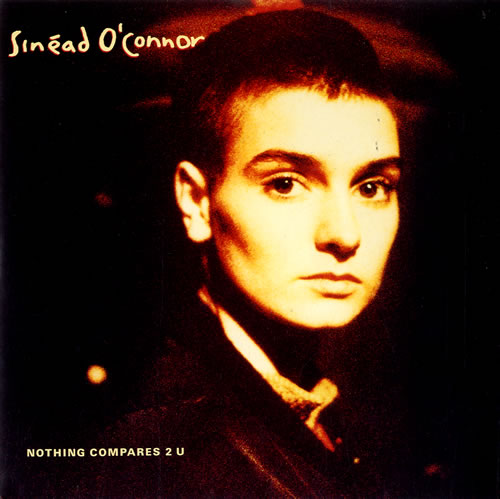
I love how Sinead O'Connor is essentially famous for two reasons: 1) "Nothing Compares 2 U"; 2) saying crazy shit. Note that the "Musical Career" section of her Wikipedia page is the same exact length as both the "Controversies" and "Personal Life" sections of her Wikipedia page. Because Wikipedia knows what we came for! If it's true that "there's no such thing as bad publicity," there may be such a thing as "publicity that keeps you in the public eye but doesn't actually help you have more hits." Although I'm about 97% certain that Sinead O'Connor didn't give a flying fuck about having hits. Quick: name all of Sinead O'Connor's hit singles. There's that Prince song she didn't even write, and ... I guess "Mandinka"? (Yes, she has had a smattering of other chart appearances in the UK, but my point mostly stands.) And yet somehow, doesn't it feel like Sinead O'Connor has had this highly lengthy career? Like Scotch tape, or Wrigley's gum, she's just always been around.
I have, on hand, at least one partial explanation for her seemingly non-one hit wonder status: O'Connor never met a tribute album she didn't like. She has contributed to everything from Stay Awake (a Disney songs tribute album) and Brand New Boots and Panties (an Ian Dury tribute album) to Just Because I'm a Woman: Songs of Dolly Parton and God Don't Never Change: The Songs of Blind Willie Johnson. You're putting together a tribute album? Better call Sinead. There are artists who launched entire musical careers solely so that one day, Sinead O'Connor could contribute a track to the tribute album that would eventually be produced in their honor. Back in the day I possessed a copy of Two Rooms: Celebrating the Songs of Elton John & Bernie Taupin, to which O'Connor contributed a tremendous, virtually a capella version of "Sacrifice," transforming it from a mid-tempo light rock pleasantry into a haunting, soul-wrenching ballad dripping with remorse and longing. But that's not what I remember most. Oh no. What I remember most is this. Every artist who recorded a song for the album, be they Sting, George Michael, Kate Bush, or Eric Clapton, wrote a little blurb for the CD booklet, essentially describing, in three or four sentences, how much they loved Elton's songs, and why they chose the track they did, and how they went about reinventing it, etc. etc. Sinead O'Connor's blurb for "Sacrifice" simply consisted of the following: "I can't believe no one did 'Candle in the Wind'." That was it. That was her entire blurb. No comment about the song she actually covered, no comment about how much Elton had meant to her as a little girl, blah blah blah. Just one sentence about something that had bothered her. We're talking some peak Sinead right there.
The other Sinead anecdote that stands out to me is when "technical difficulties" occurred during her performance of "Mother" at the Wall - Live in Berlin concert in 1990. From Wikipedia:
Roger Waters tried to get Sinead O'Connor to sing her parts anyway, or mime the song, while the error was being fixed. Offended by being asked to mime, she didn't return after the show to re-record the performance (which is how "The Thin Ice" was saved for the CD/Video release.) Instead, the release version of "Mother" comes from the dress rehearsal on the previous night before the concert.
Dude. When you've made Roger Waters look like the calm, cool-headed professional, you know you're in a category of your own. When you've out-tantrummed Roger Waters, you have really brought it to another level.
I guess I would take O'Connor more seriously if I didn't sense a complete lack of a sense of humor in her music. It turns out she does have a self-deprecating side, given that she named her 2013 tour the "Crazy Baldhead Tour," and let's not overlook this excerpt from her Wikipedia page: "While her shaved head was initially an assertion against traditional views of women, years later, O'Connor said she had begun to grow her hair back, but that after being asked if she was Enya, O'Connor shaved it off again. 'I don't feel like me unless I have my hair shaved. So even when I'm an old lady, I'm going to have it.'"
But in the end, Sinead's unpredictability is a feature, not a bug. I can chuckle at a singer and enjoy her music at the same time, right? The two attitudes are not mutually exclusive. I'm not quite laughing with her, but I'm not quite laughing at her. At least she's not boring. You know what? You go girl. You go ahead and say that controversial thing that no one in the audience actually came to hear you say.
The question, then, is not how a singer this uncompromising and volatile ever made great music, but rather, how a singer this uncompromising and volatile ever scored a hit as massive as "Nothing Compares 2 U." You might say that Sinead O'Connor having a massive #1 hit was about as likely as, I don't know, Dexys Midnight Runners having a massive #1 hit (Pfft, like that would ever happen). But "Nothing Compares 2 U" was one of those rare global monsters, hitting #1 virtually everywhere in the universe simultaneously, as if all of humanity had a mind-meld and proclaimed, "THIS song ... shall be #1." The single's Wikipedia page lists its chart performance in twenty countries, and it hit #1 in every single one of those countries except for France and Spain (maybe they like their women a little more submissive on the Bay of Biscay?). I mean, what the what. An early '90s release from, say, MJ or Madonna performing like that, I could understand, but a virtual unknown? It's not like "Nothing Compares 2 U" was written by a pop superstar or anything.
[whispers into Little Earl's earpiece] Wait, really? He wrote that? Get outta here.
For the first time in my life, I just listened to Prince's 1984 demo version of "Nothing Compares 2 U" (courtesy of Mr. Rogers Nelson having died and his estate not having the same stick up their lavender-shaded butt over the concept of one's music being accessible online), and then I proceeded to listen to the version released by The Family, one of those Prince-in-all-but-name projects that came out circa Purple Rain. A comment on YouTube underneath Prince's version sums up the situation: "If you ever thought Sinead did this better, please... NEVER call yourself a Prince fan."
Done. Easy.
Quick digression on Prince: I admire his catalog, and would not argue that his place in the critical pantheon is particularly undeserved (I also have come to appreciate his music more deeply now that he has passed). I simply just never find myself coming home after a rough day and thinking to myself, "You know what I really need to listen to tonight? Prince." I wrote the following to several friends a week or so after The Purple One's demise:
The metaphor I’ve occasionally used to describe my feelings toward the musical output of Prince: Imagine a delicious gourmet meal, stylishly displayed on a fine silk tablecloth, featuring every kind of tasty dish you could ever want – roasted duck, buttered lobster, pasta primavera, baskets of ripe fruit, freshly-baked muffins, turkey, gravy, mashed potatoes, peach cobbler, pie a la mode – you name it. The fanciest wine, glistening silverware, scented candles … cuisine fit for medieval royalty. However, sprinkled ever-so-slightly over this magnificent feast, here and there, are warm droplets of semen. Boy, that meal sure looks delicious, but, I’m sorry, I am not going to be eating any of it.
Prince isn't just Music For Guys With Girlfriends, he's more like Music For Guys With Bondage Partners. I want to relate but ... I just can't. Also, I know many critics and fans have praised Prince as a singer, but I don't particularly care for his voice. I don't hate it, but I don't connect with it either. And there's an awful lot of Prince's singing in Prince's music. Honestly, Prince just never seemed to struggle with much self-loathing or self-doubt to me. Like Highway 61-era Dylan, Prince's biggest problem simply seemed to be that other people failed to understand how much of a genius he was and that they were annoying him all the time.
Sinead O'Connor, on the other hand ... now here's a singer who's had some genuine problems in her life. When Prince sings "It's been so lonely without you here/Like a bird without a song/Nothing can stop these lonely tears from falling/Tell me baby, where did I go wrong?," I don't quite buy it. These just sound like lyrics Prince cribbed from a million other soul ballads he listened to when he was growing up, and he figured he should just throw them in there for effect. But Sinead O'Connor? She can't even make it through a freaking music video shoot without sobbing. We're talking one sad cookie here.
So it finally hit me. You know what O'Connor did with "Nothing Compares 2 U"? She turned a Prince song into a George Michael song. Just listen to that intro. There are times I've heard that initial chord on the radio and, frankly, I figured I was hearing the start of "One More Try." I'm sure Sinead has had enough of danger, and people on the street, and is looking out for angels, just trying to find some peace, you know? An extremely 1990 touch was utilizing a vaguely hip-hop beat in a chilly ballad that was built around Euro-classical elements such as violin, grand piano, and random monks chanting "Ah-ah-ah-ah." Let's hear it for surprising little touches like: 1) the drum beat entering on the fourth measure, not the third or fifth measure as one might expect; 2) the chorus gaining several additional, unexpected chords the second time around; 3) even more additional, unexpected notes popping up at the tail end of the last verse ("But I'm willing to give it another tryyyy-uh-ah-hi-yyyyee"). She brought all of those touches to the party herself. You know what O'Connor did to Nothing Compares 2 U"? She completely, utterly de-Princified it. Personally, she turned it into a song I might actually listen to upon coming home after a rough day. I kind of wish she would have done this to the rest of Prince's catalog. Just imagine her versions of "Head" or "Jack-U-Off." (Quick note on the iconic video: the best music video Joan of Arc never made?)
Prince's attitude toward O'Connor - at least according to O'Connor - further validates my hesitation to fully admire the man, for while "Nothing Compares 2 U" may have been a match made in musical heaven, an encounter between the two strong-willed artists conjures to mind something more like Godzilla vs. Mothra. From Wikipedia:
I did meet [Prince] a couple of times. We didn't get on at all. In fact, we had a punch-up. He summoned me to his house after "Nothing Compares 2 U". I made it without him. I'd never met him. He summoned me to his house—and it's foolish to do this to an Irish woman—he said he didn't like me saying bad words in interviews. So I told him to fuck off. He got quite violent. I had to escape out of his house at five in the morning. He packed a bigger punch than mine.
Come on, man. The woman just turned your dopey throwaway ballad into a hypnotic, gut-wrenching worldwide smash, and all you can do is dictate how she should and shouldn't behave in public? I'm with Crazy Baldhead on this one. Well, if Prince couldn't say it, at least I'll say it. Thank you, Sinead O'Connor. Thank you for making a version of a Prince song that wasn't sprinkled with semen. And I'm sure if I ever thanked you in this exact manner to your face, you'd probably just tell me to fuck off. But I wouldn't mind.
What the ... my God. How many sex change operations did George Michael end up having merely to make this one single video? Let's see .. he got himself a succession of nose jobs, grew a mole, even dyed his skin a couple of times ... the guy was truly sick. I know everyone's disturbed by Michael Jackson, but this is beyond the pale.
At any rate. I'm a sucker for artists who, at the peak of their popularity, just say, "Fuck it," and decide to alienate their audience. Because if it doesn't pay off at the time, it always seems to look good in retrospect. And hey, sometimes it even pays off at the time (see: Pepper, Sgt.). The easy thing to do is to simply keep giving the audience what they want - but are you giving yourself what you want? Ideally, an artist can do both, but, let's face it, a lot of people are stupid. They just want to blow a couple of hours on a Friday night watching Fast & Furious 23 or Rocky 48.676. Most people aren't looking for a challenge.
But with "Freedom '90," I think Georgie Boy managed to have his cake and eat it too. Here we have a single that was simultaneously a giant kiss-off to the entire record-buying public AND a zippy, latin-tinged uptempo hip-shaker that, lyrical claims to the contrary, pretty much gave the record-buying public exactly what they wanted. Merely reading the lyrics on the cold page, one might imagine this song as a ballad, but Georgios rides this "Sympathy for the Devil" groove for six-and-a-half minutes and sounds like he's having the time of his life doing it. (A few of my favorite musical details: the "I Saw Her Standing There"-style hand claps that pepper the vamp which follows the opening chorus; the rapid acoustic guitar strums that kick off each line of the verse; the piano glissando that powers the verse into the pre-chorus.) Against all odds, despite all the bitterness and self-hatred he's dishing out, the sprightliness of the music somehow reflects the "freedom" he's proclaiming in the lyrics. Yeah, go ahead, name me another top 10 hit from the early '90s that's anything like this one. I'll be waiting.
I'm going to go out on a limb here and suggest that, by the time of Listen Without Prejudice, Vol. 1, George Michael was recalling his Wham! years with, shall we say, a distinct lack of fondness. Personally, I'd rather have a Wham! marathon than, I dunno, a Sonic Youth marathon, but that's just me. Come on George, don't be so hard on yourself. But I suppose he was feeling the sting of artistic remorse. In the first verse of "Freedom '90," George prefaces this howl of conscience with a vulnerable plea:
I won't let you down
I will not give you up
Gotta have some faith in the sound
It's the one good thing that I've got
I won't let you down
So please don't give me up
'Cause I would really, really love to stick around, oh yeah
Translation: My new music ain't gonna sound like my old music, but you got to have faith-uh-faith-uh-faith-uh! Then the mea culpa commences:
Heaven knows I was just a young boy
Didn't know what I wanted to be
I was every little hungry schoolgirl's pride and joy
And I guess it was enough for me
To win the race, a prettier face
Brand new clothes and a big fat place
On your rock and roll T.V.
But today the way I play the game is not the same, no way
Think I'm gonna get myself happy
Well, I can certainly see why he wouldn't have found being "every little hungry schoolgirl's pride and joy" particularly fulfilling. Hi-Yo! But I digress. Have you ever had doubts about something you were doing, and yet ... you decided to keep doing it anyway? I've never had this happen to me personally, but I've had friends tell me what it's like. Wears you out, grinds you down, until one day you just can't take it anymore. And you know that switching gears is going to cost you, but you're willing to pay that price, because it's finally dawned on you that the cost of not switching gears might be higher. That's "Freedom '90":
I think there's something you should know
I think it's time I told you so
There's something deep inside of me
There's someone else I've got to be
Take back your picture in a frame
Take back your singing in the rain
I just hope you understand
Sometimes the clothes do not make the man
You can change, George! It's OK! I allow it! Jesus H. Christ. He's making Wham! sound like the Nazi Party. If so, this is the funkiest Nuremberg trial I've ever heard. And what's he got against Singin' in the Rain? Did Debbie Reynolds step on his foot in a restaurant or something? I think what he's trying to say is "I don't want to be your cheerfully saccharine song-and-dance man anymore," but no one associates George Michael with expertly-composed Gene Kelly routines. Lyric could've used a re-write, but I'll let it slide. Carry on:
All we have to do now
Is take these lies and make them true somehow
All we have to see
Is that I don't belong to you, and you don't belong to me yeah yeah
Freedom! (I won't let you down)
Freedom! (I will not give you up)
Freedom! (Gotta have some faith in the sound)
You've gotta give for what you take (It's the one good thing that I've got)
Freedom! (I won't let you down)
Freedom! (So please don't give me up)
Freedom! ('Cause I would really, really love to stick around)
You've gotta give for what you take
And so we come to the critical question of our age: what is freedom? Is freedom the ability to do whatever you want? The ability to live without regret? The ability to release whatever music is floating your boat without the record company complaining about it? The ability to ignore public health experts and take a trip to the nail salon in the middle of a pandemic? Sometimes I wonder if freedom is simply a seductive illusion and the reality is that we're all trapped inside the prison of ill-defined George Michael lyrics. The second verse deftly touches on the existence of Andrew Ridgeley without shedding any meaningful light on his actual role in Wham!:
Heaven knows we sure had some fun, boy
What a kick just a buddy and me
We had every big-shot good time band on the run, boy
We were living in a fantasy
We won the race, got out of the place
I went back home, got a brand new face
For the boys on MTV
But today the way I play the game has got to change, oh yeah
Now I'm gonna get myself happy
Andrew Ridgeley was living in a fantasy, all right - the fantasy that he was doing something valuable in Wham! Hi-Yo! Also, I'm getting this mental picture of the duo's "big-shot good time" peers such as Duran Duran, Tears for Fears, and The Smiths literally running away from Wham!, and I have to chuckle ever-so-slightly. At any rate, the song's bridge might be my favorite section (musically, I certainly dig the key change followed by wah-wah guitars shifting maniacally across the stereo spectrum), because here is where George's dueling impulses of self-loathing and self-acceptance really manage to duke it out:
Well it looks like the road to heaven
But it feels like the road to hell
When I knew which side my bread was buttered
I took the knife as well
Posing for another picture
Everybody's got to sell
But when you shake your ass
They notice fast
And some mistakes were build to last
That's what you get (That's what you get)
That's what you get (I say that's what you get)
That's what you get (for changing your mind)
That's what you get for changing your mind
That's what you get
That's what you get (And after all this time)
I just hope you understand
Sometimes the clothes do not make the man
He's not whining, he's not deflecting, he's not claiming that he was some sort of "victim" who was "taken advantage of" by the business. He chose this path! He's admitting that he was deliberately complicit in the creation of the image that he no longer wishes to perpetuate. To tear it all down is a massive pain in the ass, but, as he says, "that's what you get for changing your mind." He's cool with it. He's ready to deal with the blowback. How should we interpret the "I took the knife as well" line? Is he suggesting that the pain of making mindless '80s synth-pop was akin to the pain of being stabbed in the chest with a bread knife? Or is he suggesting that he took that bread knife in his hands and proceeded to stab his rivals with it on his way to the top? Jesus, who knew the Wham! experience was so violent?
In the end, one last round of the chorus grants George his true vocal freedom, as he lets rip in the fade-out with the kind of liberating ad libs that were the man's forte: "You got to give-uh-whatcha-give-uh-whatcha-give-uh-whatcha taaaayyyy-aaaayy-aaake ... yeah! You got to give-uh-whatcha-give-uh-whatcha-give ... may not be what you want from me, just the way it's got to be ... lose the face, now ... got the new, got the new ..." I'm fairly certain that not even Nelson Mandela, when his 27 years in captivity finally ended, sounded quite as pumped as George does right there.
So after a brief Google search, I found this article written shortly after George's death, from NPR's Linda Holmes, titled "The Individualism and Fist-Pumping of George Michael's 'Freedom '90'," and now that I've read it, I kind of wonder if I could have saved myself the effort of composing this blog post (but nah). To summarize Holmes's take: "Freedom '90 is not just an expression of individuality, but an expression of vulnerability and dependency as well ... and it also grooves like a motherfucker. Which is kind of what I said. Excerpts:
It begins with just the beat, then the bass and keyboards, and the first appearance of a chant that will recur over and over: "I will not let you down/I will not give you up." It's a song of independence, but its first declaration is of mutuality: a promise and a vow, a sort of "I offer" and "I want" rhythm. Then: "Gotta have some faith in the sound/it's the one good thing that I've got." So there's "faith" wordplay, and there's the idea that artists are not just in business, even when they're pop musicians. Again, while it's declaring independence, it's also admitting vulnerability: part of the reason to preserve your artistic and personal sense of self goes well beyond principle – you do it because to do otherwise can make you desperate and lonely. Then a shift: "I will not let you down/so please don't give me up/'cause I would really really love to stick around."
"Please don't give me up." Please. Very often, you find a song of independence – of freedom – steeped in a kind of "I don't need anybody and I don't care what anybody thinks" autonomous flippancy, structured like a kiss-off. This is the opposite...
When "Freedom '90" rolls into the chorus, it's with the same commitment to mutuality that showed up in the opening: "All we have to do now/is take these lies and make them true somehow." It would have been so easy for this song to be about his freedom, and to just say, "All I have to do now/is take these lies and make them true." But both the use of "we" and the trailing "somehow" – the latter is sung almost on a sigh – make it a song of commonality between a very famous pop star and the people who listen to him.
Yeah, what she said! What's powerful about the song is that George isn't just telling his audience to fuck off (although I kind of think he's doing that); rather, he's asking his audience to accept the "new" George. Indeed, many have read the song as the singer anticipating public reaction to a certain "secret" of his. Here's a quote on Wikipedia from an interview he gave in 2004: "By the end of the Faith tour I was so miserable because I absolutely knew that I was gay... I didn't suddenly want to come out. I wanted to do it with some kind of dignity. So I thought 'okay, you have to start deconstructing this whole image.' " Of course, being arrested by an undercover cop in a public restroom isn't exactly what I'd call "coming out with dignity," but hey, at least the sentiment was there.
And it looks like there was a semi-happy ending after all, because although it stalled at #28 in the UK (lord knows why), "Freedom '90" hit #8 in the US, and I actually remember hearing it a lot more on the radio than I heard "Praying for Time," even though that single hit #1, and basically, what I'm saying is, people loved the "new" George Michael just as much as the old one. Or rather, let me say that in the US, George may have won the battle but he lost the war, whereas in the UK, he lost the battle but won the war. Although his popularity never did wane in Britain, he only managed a few more hits in America after this one, and never did duplicate the success of the Faith era. Sure, George, you can have your "freedom" ... and take it back to Britain with you while you're at it.
OK, so, this video. Whenever my co-blogger Zrbo and I, in our younger years, got around to discussing the relatively overlooked works of the George Michael oeuvre, he would always express his admiration for "the awesome video for 'Freedom '90' with all the supermodels singing the lyrics!" Ironically, while I vividly recall seeing the "Praying for Time" video back in 1990 and finding it rather groundbreaking, although it seems like most people hardly mentioned that video in the years to follow, I have no recollection of seeing the "Freedom '90" video at the time, even though I've learned in retrospect that it was (and is) considered rather groundbreaking.
Here's the deal. Supermodels are generally not the types of celebrities I admire very much, although I'd probably date one if I could (on the other hand, who wants to deal with all that ego?). According to a slew of articles, the "Freedom '90" video "ushered in the era of the supermodel" or some nonsense like that. Am I supposed to ... celebrate this? Although I appreciate the way in which George Michael and David Fincher used the video to subvert viewers' expectations and to render explicit MTV's desire to turn every talented musician into a photogenic pin-up, part of me feels like the video has merely fed into our culture's obsession with superficial glamour while ostensibly attempting to critique it. Yeah, all right, I'm sounding like Professor Higglediggle here, but when half the comments underneath the video on YouTube are statements like "Linda, Christy, Naomi, Tatjana, Cindy all put the 'Super' into Supermodels. They don't make them like they used to!" and "When models were actually beautiful! Today....not so much," I just don't get it. These people rank supermodels the way I rank ... George Michael songs. But George Michael songs can be dark and intense and thoughtful; supermodels are just ... supermodels. Well, people love the video, and I can see why (here's an oral history from the New York Times if you'd like to learn more of the gritty backstory). But if it had featured, say, a series of skeletal gay men dying of AIDS lip-syncing "Freedom '90," now that would have had some real sting to it. Let's see what our fair professor has up his sleeve this time:
Failing to circumnavigate the overworked codes of communal empowerment, Michael avoids using his accumulated symbolic capital to (re)contextualize the repressed "other," instead appealing to the politics of substitution as style. His glottal cry of "freedom" never transcends the sententious dualism implicit in his assemblage of (homo)erotic formations, ignoring Foucault's analyses of sovereign and disciplinary power as formulated in Discipline and Punish. For the viewer, the "freedom" suggested by the reductive co-optation of the "supermodel construct" in the music video serves as a non-subjective reminder of that viewer's physical inferiority. Michael's attempt to "free" himself from his creative history only reinforces his subservient position ("To win the race, a prettier face") per the culture industry that birthed him.