Thursday, May 31, 2007

The Baseball Mascot

Now think. Think for a moment. Try to think of something more inherently amusing than the baseball mascot. Guess what, you lose, because there is nothing. Nothing that can match the awkward combination of childish enthusiasm, grown-up skepticism, and misguided marketing that the baseball mascot engenders. The problem is that it's not exactly clear what role the baseball mascot serves. It is for the kids? Often, but not always. It is for the adults? Adult baseball fans are mostly males who treat their sport with relative solemnity. The mascot is baseball's lone intersection with out-and-out fantasy. As such, it must achieve a delicate balance. Done right, it can serve as a further bonding mechanism between the fan and the team. Done wrong, it can serve as an object of relentless fan scorn. Sometimes it is both. The mixture of the mascot's surface optimism and the fans' deep-rooted pessimism can make the mascot ripe for parody (see the Capital City Goofball). You just know, for example, that the guy underneath the giant Mr. Met baseball head beats his wife mercilessly every night when he gets back from the game. Let us now, if we may, explore the world of the major league baseball mascot.

At the top of the heap, according to those in the know, is Phillie Phanatic (pictured above with our president). He is a "phanatic," so they say, because Phillies fans are known for being particularly aggressive and confrontational. Hey, I wouldn't want to be on the wrong end of Phillie Phanatic's nose, if you know what I mean; it resembles the top of a water faucet missing its turning mechanism. It looks like he and Tommy Lasorda had a bit of a fued going on back in the day. He also continues the trend of children's characters who don't seem to worry about underpants. Phillie Phanatic is the ultimate representation of one of the major subsets of the baseball mascot: the Sesame Street reject. For further examples, just look at Wally the Green Monster, who apparently lived inside Fenway Park's famous outfield wall until popping out of hiding for its 50th anniversary, and Youppi, formerly of the Expos, who holds the dubious distinction of being the only mascot to have ever been ejected from a game.

Moving on to the animal kingdom, we get the Washington Nationals' Screech, who is apparently supposed to be an eagle but more closely resembles a chicken. According to his website, his favorite movie is The Aviator, his favorite band is Wings, and his favorite song is Steve Miller's "Fly Like an Eagle." One animal mascot that I find particularly disturbing is the Mariner Moose, who just doesn't seem right standing on two legs (he does do birthday parties and bar mitzvahs, however). Also creepy is Pirate Parrot, who's even creepier given that he's also been a drug dealer.

Most disturbing of all, though, is Mr. Met, who comes off like somebody's freaky McDonald's-esque bad dream. He's an anthropomorphic... baseball. I associate baseballs with many things, but "cute" and "cuddly" are not among them. He even haunts fans at road games!

Some mascots don't even need to be guys in costumes. For about twenty years, the mascot of the Kansas City/Oakland Athletics was apparently a real live mule named Charlie-O. Sometimes the mascot doesn't even need to show up in person, as with the Angels' infamous Rally Monkey.

Then there are those mascots who, when mistreated, bring down the scorn of ancient civilizations. It was said that when the stadium workers disturbed the teepee of the Braves' Chief Noc-A-Homa, the team would automatically slide into a losing streak. When he was put back where he belonged, the team would win the pennant. The moral: Don't mess with the mascot.

Finally, we come to the failed mascots. There's the White Sox's Ribbie and Roobarb (who actually suffered physical abuse), the Yankees' Dandy (who I suppose wasn't so dandy), and my personal favorite, the Giants' post-modern Crazy Crab (the self-described "anti-mascot"), who, for reasons that are obvious, only lasted a year, although some lone fans are pushing for a revival. Perhaps they can count me among them.

Monday, May 28, 2007

Children of Men (Cuaron)

Don't you hate it when somebody else beats you to a good idea? See, me and Alfonso Cuaron, we've got some business to settle between us. I know he just adapted somebody else's book, but I don't care. It's not really fair because he already had a bunch of actual movies under his belt, an actual movie career and, presumably, an actual finished screenplay. But I'll pick a fight with the bastard anyway.

See, a few months ago, I had this idea for a screenplay. Yoggoth and I were planning on writing it together. ** cue the laughter ** My idea was that we would do a science fiction film, but make it very, very plausible. It would take place about twenty years into the future. Since I personally don't believe that the immediate future of the Western world looks very promising, I supposed this fictional future of ours would be rather dystopian, but not quite 1984 dystopian. Many science fiction films have a vision of the future that's incredibly amazing and exotic, but in reality the future will probably be rather mundane. Remember how in the 50s everybody assumed that the future would be like the Jetsons and we would all be flying around in little airplane cars and have robot maids and eat pills for a meal? Didn't happen. People still drive cars and wear jeans and cook hamburgers. Our lives have changed, but in subtler, sneakier ways. Certain parts of the earth could be in for a big change, but for most of us, my bet is that daily life will not be noticeably different, at least not in a Jetsons sort of way. Some nukes will most likely go off, but T.S. Eliot probably hit it right on the nose with that whole "not with a bang but with a whimper" thing. If humanity's in for extinction, it's in it for the long haul. Finally, this conception of the future is quite convenient from a filmmaker's perspective because it requires virtually no budget.

The reason why I felt this was a subject with much potential was because, the way I see it, many middle-class Americans at the moment are currently in a bit of a state of denial regarding the ease with which our mostly prosperous and orderly society could slip into some sort of third-world disaster zone. The problem isn't so much the slip, if you ask me, as it is the denial. A great work of fiction at this time could close the gap between people's ignorance of the future and the reality of that future. This was the motivation for our screenplay. Sadly, the screenplay came to a quick impasse due to Yoggoth's possible lack of enthusiasm for the project (?) and our unease with the creation of a female protagonist.

Suddenly, a few months later, I heard of the impending release of a new film called Children of Men. I read an early review and...hmm. "Dystopian future"? "About twenty years from now"? "Most of civilization destroyed by nukes"? Sounded like somebody had beaten us to it. Naturally I was a little concerned, wondering if this new film would render our idea obsolete. On the other hand, I saw the situation as one of possible relief; if this film covered all the ground our film had hoped to cover, then maybe we wouldn't need to make our film at all and we could work on something else. Either way, I was highly curious.

I became more curious when the film received some ecstatically orgasmic reviews. Slate called it "the movie of the millenium" or something impressively hyperbolic of that nature. The Rotten Tomatoes message boards were practically hemorrhaging with awe over the film. Some users with pretty respectable taste were already adding the movie to their top ten lists of all time. "No film could be that good," I thought. Then again I never thought Adaptation. would be that good, and Adaptation. made it into my top ten, so who knows? Still, I was skeptical because I knew that over the past few years or so there have been plenty of movies that have been called flaming masterpieces that really were not. Masterpieces are hard to make. They don't happen with ease. Certain films with many strong elements going for them are not necessarily "masterpieces." A masterpiece has to have a little of that intangible something extra. It has to have a kind of magic about it. Reading about Children of Men, it didn't really seem like that kind of movie. But of course I had to go see it anyway.

So I saw it, and now five months later, what do I think? I think it's almost impossible for me to have an unbiased opinion, is what I think. I can see why people were impressed. I can see why certain viewers and critics thought it was the best film of the year. Because it was very ambitious and very plausible and it's been a long time since a science fiction film has been more than basically just an action film in disguise. But most of the people who went to see Children of Men hadn't already been thinking about a work of fiction along similar lines. It's a bit preposterous for me to say that I view Alfonso Cuaron as competition, but yeah, he's competition, the fucker. So while I could understand why the film would have been impressive to others, to me it was...something of a disappointment. Many of the elements were superlative, I grant you that. But overall I didn't really feel that the film had explored the potential of its premise to the fullest.

First of all, the film was simultaneously ambitious and yet...not ambitious enough. It was more like a short story than a novel. By confining the action to only a few characters and to only a few days, Cuaron took the easy way out. It meant that he didn't have to address any of the really thornier questions that a science fiction has to deal with, like how the world got the way it did, or what happened to the rest of the population. The limited scope meant that while the film never did anything awkward or silly, it also meant that it never really went anywhere profound or thought-provoking either - at least not as profound and thought-provoking as the subject matter could have allowed.

What was the film trying to say? That humanity's ability to give birth to children is essential for its own happiness? Is that really humanity's biggest problem right now? I would say that a more pressing problem is the opposite: that humanity is giving birth to too many children. Sure, I guess the disappearance of childbirth is one thing that could happen to humanity in the next few years or so. But it's hardly the most likely thing. More likely is that people will keep giving birth to children who will die violently at a young age. This is the more pressing issue: the prevalence of death that seems outrageous now but will probably become the norm. The denial gap needs to close. And Children of Men didn't really help close the denial gap.

Yes, the film was gripping and thoughtful and well-made. But a "masterpiece" would need to not only be gripping and thoughtful and well-made, but also rejuvenate the viewer and fill him with the intangible beauty of life. That's how I felt about one of Alfonso's earlier films, Y Tu Mama Tambien. Now that was a fucking masterpiece. It was a masterpiece because it kept surprising me around every turn with a twist I didn't see coming but thought I should have, or a quiet observation that changed my perception of the characters in an instant. It was detailed and funny and shocking and weird and joyous. Children of Men, by comparison, was more like a good idea than a movie. The characters barely even showed up. I didn't feel like I knew these people, and if I didn't know them then I didn't really care what happened to them. Y Tu Mama Tambien was like an undertow because the characters were so vivid.

But hey, I liked Children of Men a lot. If it hadn't been instantly drooled over as "the movie of the decade" or whatever, then I'd be probably be defending it a lot harder. We need more movies like it, certainly. But it's kind of annoying to hear everybody praise a movie when you're sitting there thinking about how your movie would have been even better! Of course, the game is still young.

Maybe there's hope for our hopeless dystopian future yet.

Friday, May 25, 2007

The "Genius" Of The Wilson Brothers?

Slate's at it again with another article dissecting the "unfulfilled promise" of something that nobody really thought was that promising anyway. Last time it was Jack Black, this time it's the Wilson Brothers. The Wilson Brothers? As actors? Sure they're entertaining, but who ever said they were brilliant masters of their craft? Maybe Owen Wilson has some talent as a screenwriter (given his apparent collaborations with Wes Anderson), but as far as his acting career is concerned it's not like he's Bill Murray. To quote Kenneth Branaugh, it's much ado about nothing. I do like the author's descriptions of the brothers' onscreen personas, but other that than that, she would have been better off writing about something that everyone agrees actually really had potential. Going back a little further, another article in Slate expresses disappointment with The Life Aquatic by crediting all of Wes Anderson's success to Owen Wilson's screenplay contributions. Call it a hunch if you will, but my bet is that Wes was probably the brains behind that team (and I would also disagree with the currently fashionable critical opinion that The Life Aquatic was "clever but hollow" and that Wes Anderson's career has descended into "solipsism and ironic overload").

Tuesday, May 22, 2007

Thanks For The Alienation

Thomas Edison - Wikipedia

It's possible that I owe almost all of my ability to drown myself in the pre-recorded media of other eras to some smelly geek from New Jersey (I suppose I can also thank him for the ability to stay up much later than a human being naturally should, but I'll do that later). In the back of my mind I've always been impressed that the same man could have been responsible for both recorded music and the motion picture; doesn't that make him like "the Godfather of Pop Culture" or something? Too bad he had almost no interest in art whatsoever. Reading his bio, it seems that his biggest legacy is one of really putting the "pop" in popular culture. Sure, anybody can make a piece of metal glow in a lab somewhere, but how many people can build a contraption that sits on a shelf somewhere until someone tries to plug it in at a time of their own convenience? Still, I'd always pictured him to be sort of an Orson Welles when he's really more of a Walt Disney.

Thoughts:

So was he deaf or something? How could he have invented the phonograph if he was deaf? And why hadn't I ever heard about this before? Maybe he was only partially deaf:

"The cause of Edison's deafness has been attributed to a bout of scarlet fever during childhood and recurring untreated middle ear infections. Edison around the middle of his career attributed the hearing loss to being struck on the ears by a train conductor when his chemical lab in a boxcar caught fire. In his later years he modified the story to say the injury occurred when the conductor, in helping him onto a moving train, lifted him by the ears.[3][4]"

Can that really make you deaf? Or maybe medicine was really that bad back then. Maybe it was all for the best:

"Edison's deafness allegedly aided him because it blocked out noises and prevented Edison from hearing the telegrapher sitting next to him."

Have deaf people been used in this way throughout history? Like do airlines hire deaf people to work near loud jets and stuff? Think of the potential.

"Edison said he wanted the lab to have "a stock of almost every conceivable material." A newspaper article printed in 1887 reveals the seriousness of his claim, stating the lab contained "eight thousand kinds of chemicals, every kind of screw made, every size of needle, every kind of cord or wire, hair of humans, horses, hogs, cows, rabbits, goats, minx, camels...silk in every texture, cocoons, various kinds of hoofs, shark's teeth, deer horns, tortoise shell...cork, resin, varnish and oil, ostrich feathers, a peacock's tail, jet, amber, rubber, all ores..." and the list goes on.[14]"

First Witch

Round about the cauldron go;
In the poison'd entrails throw.
Toad, that under cold stone
Days and nights has thirty-one
Swelter'd venom sleeping got,
Boil thou first i' the charmed pot.

ALL

Double, double toil and trouble;
Fire burn, and cauldron bubble.

Second Witch
Fillet of a fenny snake,
In the cauldron boil and bake;
Eye of newt and toe of frog,
Wool of bat and tongue of dog,
Adder's fork and blind-worm's sting,
Lizard's leg and owlet's wing,
For a charm of powerful trouble,
Like a hell-broth boil and bubble.

ALL

Double, double toil and trouble;
Fire burn and cauldron bubble.

Third Witch

Scale of dragon, tooth of wolf,
Witches' mummy, maw and gulf
Of the ravin'd salt-sea shark,
Root of hemlock digg'd i' the dark,
Liver of blaspheming Jew,
Gall of goat, and slips of yew
Silver'd in the moon's eclipse,
Nose of Turk and Tartar's lips,
Finger of birth-strangled babe
Ditch-deliver'd by a drab,
Make the gruel thick and slab:
Add thereto a tiger's chaudron,
For the ingredients of our cauldron.

So how about the "War of the Currents"? Doesn't quite have the same oomph of "War of the Worlds," or "War of the Roses" even. But we shouldn't assume that just because the name was dull that the war was dull:

"Despite Edison's contempt for capital punishment, the war against AC led Edison to become involved in the development and promotion of the electric chair as a demonstration of AC's greater lethal potential versus the "safer" DC. Edison went on to carry out a brief but intense campaign to ban the use of AC or to limit the allowable voltage for safety purposes. As part of this campaign, Edison's employees publicly electrocuted dogs, cats, and in one case, an elephant[18] to demonstrate the dangers of AC."

Talk about shock tactics! (da dum dum)

"Another of Edison's assistants was Nikola Tesla, who claimed that Edison promised him $50,000 if he succeeded in making improvements to his DC generation plants. Several months later, when he had finished the work and asked to be paid, Tesla claimed that Edison said, "When you become a full-fledged American you will appreciate an American joke."[19]

Funny!

But apparently not evenyone could take a joke:

"Although Tesla accepted an Edison Medal later in life and professed a high opinion of Edison as an inventor and engineer, he remained bitter. The day after Edison died, the New York Times contained extensive coverage of Edison's life, with the only negative opinion coming from Tesla who was quoted as saying, "He had no hobby, cared for no sort of amusement of any kind and lived in utter disregard of the most elementary rules of hygiene" and that, "His method was inefficient in the extreme, for an immense ground had to be covered to get anything at all unless blind chance intervened and, at first, I was almost a sorry witness of his doings, knowing that just a little theory and calculation would have saved him 90 percent of the labor. But he had a veritable contempt for book learning and mathematical knowledge, trusting himself entirely to his inventor's instinct and practical American sense."

My my, somebody's jealous! Tesla sounds more like a jilted lover than a frustrated collaborator. I detect a hidden sub-plot.

Thank goodness Edison was an inventor instead of a doctor:

"Influenced by a fad diet that was popular in the day, in his last few years "the only liquid he consumed was a pint of milk every three hours."[24] He believed this diet would restore his health."

Well? Well? Did it work?

Let's also be glad that Edison won out over Alexander Graham Bell on the phone greeting question:

"While working with Alexander Graham Bell to discover words of greeting, Edison is credited as creating the word "Hello" as a telephone greeting in 1877.[26][27][28] Bell, however, preferred "Ahoy-hoy" as a greeting.[29]"

I mean, "Ahoy-hoy" definitely has some potential. I think I might start using that actually. Don't be surprised if you give me a call and hear "Ahoy-hoy" from now on.

"Edison was so fascinated by Morse Code that he taught it to his girlfriend Mary Stilwell, proposed marriage to her in the code, and nicknamed their first two children "Dot" and "Dash"."

How romantic.

"Edison's company was considerably late in the business of releasing music on phonographs. Reportedly, Edison considered his invention to be limited to a business dictation machine, and the concept of pre-recorded music never crossed his mind."

Hello! Come on buddy! Talk about not seeing the forest for the trees.

Monday, May 21, 2007

McCartney Interview

There's an interesting interview with Paul McCartney over at Pitchfork.

"...my fingers, the sensors on the ends of my fingers, the thousands of little sensors, would be able to differentiate between a leaf and a tabletop, or a shirt, or a t-shirt and a pullover. That's how sophisticated we are. And we take it for granted! We go, "Yeah, well, it's the end of my fingers!"

The Actual Lyrics to "Jumpin' Jack Flash"

I was born in a cross-fire hurricane
And I howled at my ma in the driving rain,
But it's all right now, in fact, it's a gas!
But it's all right. I'm Jumpin' Jack Flash,
It's a Gas! Gas! Gas!

I was raised by a toothless, bearded hag,
I was schooled with a strap right across my back,
But it's all right now, in fact, it's a gas!
But it's all right, I'm Jumpin' Jack Flash,
It's a Gas! Gas! Gas!

I was drowned, I was washed up and left for dead.
I fell down to my feet and I saw they bled.
I frowned at the crumbs of a crust of bread.
Yeah, yeah, yeah I was crowned with a spike right thru my head.
But it's all right now, in fact, it's a gas!
But it's all right, I'm Jumpin' Jack Flash,
It's a Gas! Gas! Gas!

Jumping Jack Flash, its a gas

(Jagger/Richards)

Sunday, May 20, 2007

Pickpocket


My initial reaction to watching Pickpocket was, "What a great movie! Too bad most of the people I know won't like it." Many of the black and white European movies I've seen have fallen into one of two categories. They are either excellent in their own right and don't exhibit any of the stereotypical "subtitle movie" qualities that many Americans object to. What I mean is that they aren't boring, they've got just as much going on plot-wise as any American film, and they're focused around meaningful character development. They may be slightly less forceful in their melodrama, but there isn't much seperating these movies from standard Hollywood fare. The other category is made up of those films that are in fact boring and pretentious. Hello Tartovsky! I still enjoy watching these films, but I would understand if a friend walked off halfway through a viewing.

Pickpocket splits the difference and somehow makes me like it all the more for this. It is emotionally flat at times and much of the film is quite uneventful. A fan of quick dialog and wrenching emotional acting would find it tedious I imagine. There are long shots of the pickpocket's face reacting to something directly behind the camera. When the shot finally flips around we see only a man standing on a sidewalk in daylight. The man could be anyone and the street could be any street. For long stretches of the film the soundtrack consists only of the clicking and grinding of shoes on pavement. Anonymous Parisians walk through the frame, perhaps they are the police from previous scenes stalking our pickpocket, perhaps they are merely pedestrians. Bresson did include several montages of the pickpocket and his accomplices at work. We see the quick finger work and sly hand-offs that allow these men to transfer the wallets and money wads of their victims away from their bodes without suspicion. However, these sequences serve mostly as emotional interludes to the pervading anxiety of the pickpocket's life.

This surprising quality, that the pickpocket is most comfortable at the times when he is in the greatest danger of being caught, reveals his character. Yes, he steals because he needs money, but I believe his main motivation is boredom and loneliness. The other pickpockets, and even the police who threaten him, are closer to him than his best friend. Why is the pickpocket so alone? He is a man without a place in society but with grand conceptions of his own possibilities. He will not take the crappy jobs his friend finds for him because he feels above that kind of life. Yet, because he will not accept these jobs he is driven to act in ways that lower him beneath even this level. He is a meek and minor Satan, refusing servitude in exchange for a vile freedom. The characters in the movie mention Raskolnikov, the hero of Crime and Punishment, and this is a fitting comparison, but I found myself thinking more of Camus' The Stranger and Defoe's Moll Flanders. The pickpocket is offended by the absurdity of the universe but he is also trying desperately to fit into that very absurdity.

I won't give away the plot for those of you that haven't seen it, but I will say that Michel's last line in the film reveals a side of his character that I had hoped for, but that was not apparent in any other scene. Perhaps there was a preoccupation that explained his actions from the beginning. This scene is offers an incredible amount of pathos because it comes after seventy minutes of tense, bland conversation, and awkward character interaction. I would go so far as to rank the ending of Pickpocket as one of the greatest film endings of all time.

The DVD version of Pickpocket comes with excellent interviews with the cast members and one older interview with Bresson form French television. In response to the question, "Do you feel alone?" (Not the sort of question you'd hear on Entertainment Tonight or The Actor's Studio) Bresson says, "Yes, I feel quite alone. And I gain no satisfaction from this feeling." In light of this, I can't help seeing Pickpocket as a sort of fantasy wish fulfillment. It doesn't hurt that Michel's love interest is played by 16 year old Marika Green, a woman of captivating beauty (I found it difficult to watch anything else when she was on screen, if it wasn't revealed at some point that Michel also felt this way I would have found the film difficult to believe in). Bresson also says that he doesn't feel the acting, or non-acting style that he evoked from the cast members was unrealistic. Thinking back to some of the most important events in my life I understand what he means. At times of great emotional turmoil I often find it more difficult, not less, to express myself. Laughter or tears often demonstrate an emotion that we have dealt with and are moving past, while a blank face can hide a mind reeling in horror from events it cannot accept or understand.

Friday, May 18, 2007

Hotter Than A . . . Man Shed?

As I was listening to the Lovin' Spoonful's "Summer in the City" this morning, I suddenly realized that the words to a certain section of the song might actually be "hotter than a match head" and not "hotter than a man shed," as I had assumed they were for years and years. You know how sometimes you just get a certain set of lyrics in your mind and you never think too hard about it, even thought somewhere along the line you know those can't possibly be the real words? I guess I always just figured "man shed" was Southern slang for "a really hot day" or something like that. I mean, hey, a man shed is probably pretty freakin' hot when you think about it. It's like how I used to think "I was raised by a toothless, bearded hag" in "Jumpin' Jack Flash" was actually "I was raised by two phlegms split in half." In the end, what's the difference, really?

Tuesday, May 15, 2007

Now That's How You Play the Drums

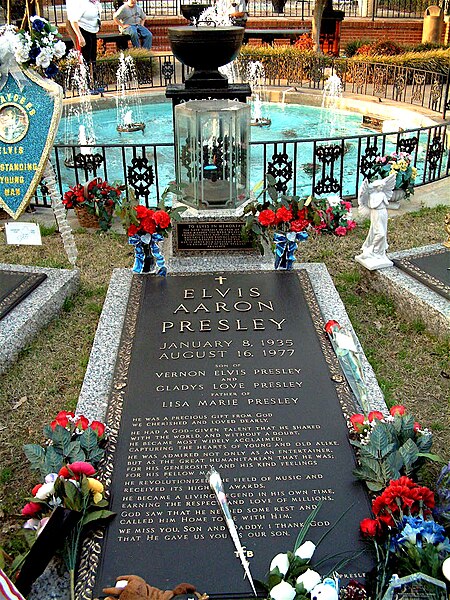
The Case for Graceland


I'll come right out and admit that my mother is one of those aging baby-boomers who loves Graceland. She listened to it constantly while I was growing up and, because of this youthful inundation, I will forever have a piece of my brain dedicated to recognizing the melodies and rhythms of this album. There I'll be years from know, mind eaten away by years of e-pleasure implant abuse, drooling and mumbling about my lost African love, last seen ducking into a New York taxi. The fact that it never happened will only make it seem more real--myth of fingerprints and all that...

To start with, I like the African musical elements on this album. They work well with Simon's lyrics. The shuffling rhythms add some much needed energy to counter the tendency towards lazy folk/jazz miasma that tarnished some of Simon's 70's work. The vocal harmonies add depth to the soft urban-noir tinge of Simon's lyrics. Before this album came out Paul Simon was dangerously close to becoming a sort of thinking man's James Taylor. Now he's become the has-been that puts ethnic music in all of his albums. I'd rather that than any sort of hyphenated Taylor construct.

Other than the world music angle, I don't see much of a difference between Graceland and Simon's other albums. Now, I love 'Kodachrome' as much as anyone, even Little Earl, but what's so edgy about it? Is it because he says 'crap' in it? The wonderful thing about Kodachrome is it's lack of nostalgia. He's not singing about how great black and white photography was. He likes color! Cheap accessible color! But then you get to Simon's other hits from the 70's and it's nothing but nostalgia. His experiments with other musical styles seem forced. Listening to 70's Paul Simon I find myself wishing for more 'Kodachrome's and less 'Loves Me Like a Rock's.

Little Earl is right about one thing, the production on Graceland is mediocre. You can tell that there's a lot of stuff going on, but you can't hear everything. This is a problem that is common to 80's recordings. They had so many tracks to work with so they added all kinds of bells and whistles but the early digital recording technology just mashed everything together. Still, for an 80's album Graceland doesn't sound terrible. 'Diamonds on Souls of Her Shoes' in particular stands out. It has decent sonic range and doesn't go crazy with the electro-accordian or whatever that is on 'Graceland'.

Little Earl's objection to the African musicians appearing on the album seems unfounded to me. Sure, there are problems in America but that doesn't have much to do with apartheid in South Africa. Bringing attention to one problem won't take attention away from the other. Simon brought good paying jobs to people that might not be able to get employment under a racist system. How can that be a bad thing?

Paul Simon never wrote a song as emotionally affecting as 'The Sound of Silence' or 'Bridge over Troubled Water' after he split from Garfunkel. But for my money, Graceland is the best solo Simon album overall. It is a bit boring in places but not every song can be 'Kodachrome'.